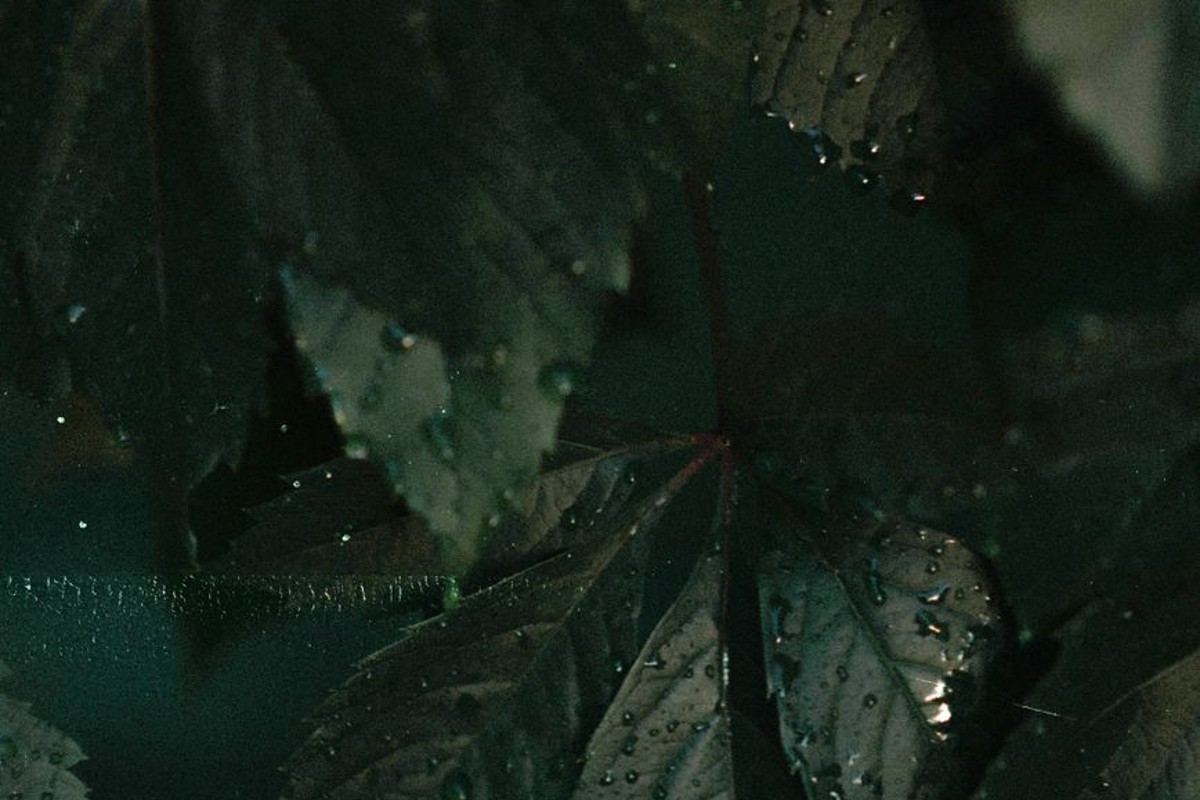

I was on a park bench, the kind with chipped green paint that looked like it had seen a hundred seasons. It was late spring, and a soft, insistent rain had just finished, leaving everything glistening. The air was thick with the scent of damp earth and the sweet, heavy perfume of rhododendrons blooming nearby. My shoulders were tight, neck aching from hours spent hunched over my laptop, trying to force solutions to problems that felt too big. My mind was a whirlwind of to-dos, anxieties, and what-ifs. I had walked to the park specifically to "clear my head," but all I was doing was dragging the whirlwind with me, amplifying it.
I closed my eyes for a second, trying to push away the noise, internal and external. When I opened them, my gaze landed on a single rhododendron leaf, perfectly cupped, holding a tiny, shimmering pool of rainwater. The light hit it just so, reflecting a miniature sky. It wasn't profound, not a sudden epiphany, but for a split second, my mind latched onto that leaf, that tiny world. The buzzing in my head softened, just for a breath.
What Wherever You Go, There You Are Actually Says About Being Present
Jon Kabat-Zinn’s "Wherever You Go, There You Are" isn't about escaping your problems or finding a magical solution to suffering. It's a gentle, persistent invitation to simply *be* with what is, exactly where you are. The core of his message is that the present moment, rather than being a fleeting point between past and future, is the only place we truly inhabit. Our minds, however, are constantly pulling us away – into regrets about what has been or anxieties about what might be. Kabat-Zinn, as a pioneer in bringing mindfulness into mainstream Western medicine through his Mindfulness-Based Stress Reduction (MBSR) program, argues that mindfulness isn't some esoteric spiritual practice, but a fundamental human capacity we can cultivate.
He defines mindfulness as "paying attention in a particular way: on purpose, in the present moment, and non-judgmentally." This seemingly simple definition carries profound implications. It means actively choosing to notice our thoughts, feelings, and bodily sensations without getting swept away by them or labeling them as "good" or "bad." It’s about cultivating an awareness of our internal landscape and external environment as it unfolds, moment by moment. The book emphasizes that there's no special place or time required for mindfulness; it can be practiced while washing dishes, stuck in traffic, or, as in my case, sitting on a park bench. The title itself, "Wherever You Go, There You Are," is a potent reminder that we carry our inner world with us. Running away, whether physically or mentally, rarely solves anything because the "you" – your thoughts, patterns, and reactions – remains constant. True change, therefore, must begin within, by engaging with our present reality rather than constantly seeking to alter or escape it. Kabat-Zinn encourages us to anchor ourselves in the breath, in the body, and in the sensory details of our immediate experience as a way to return to the "here" and "now."
The Quiet Revelation of the Present
The thing that always gets me about this idea, and about that moment on the bench, is how small it feels. It wasn't a big, dramatic shift. No trumpets sounded. It was just a tiny crack in the usual wall of noise, a momentary softening. I'm so used to thinking that "progress" has to look like a mountain climbed, a breakthrough achieved. But sometimes, it's just noticing a single, wet leaf. It felt like permission to stop *trying* so hard, to just *be*. And in that space, a quiet kind of clarity sometimes finds its way in, not because I forced it, but because I finally stopped pushing everything away. It’s not about finding happiness *there* or *then*, but about acknowledging that everything I needed was already *here*, even if obscured.
Key Takeaways
- Notice the small sensory details around you throughout your day – the temperature of your mug, the sound of birds, the texture of your clothes.
- When your mind is racing, gently bring your attention to your breath, just for a few cycles, without judgment.
- Understand that mindfulness isn't about stopping thoughts, but about observing them without getting entangled.
- Remember that "being stuck" often feels worse when we're trying desperately to "get unstuck" rather than simply acknowledging the feeling.
- Take short, deliberate pauses throughout your day to simply exist, without an agenda.
Should You Read Wherever You Go, There You Are?
If you're tired of feeling constantly overwhelmed, constantly trying to optimize yourself, or constantly searching for answers *outside* of yourself, then yes, this book is probably for you. It's not a quick fix or a step-by-step guide to instant enlightenment. Instead, it's a patient, compassionate companion for anyone curious about integrating more presence and peace into their everyday life. If the idea of sitting still makes you twitchy, or if you're skeptical of anything that sounds too "spiritual," Kabat-Zinn's pragmatic, science-backed approach might surprise you. It's a gentle but firm reminder that true transformation often comes from simply showing up for your own life, exactly as it is.