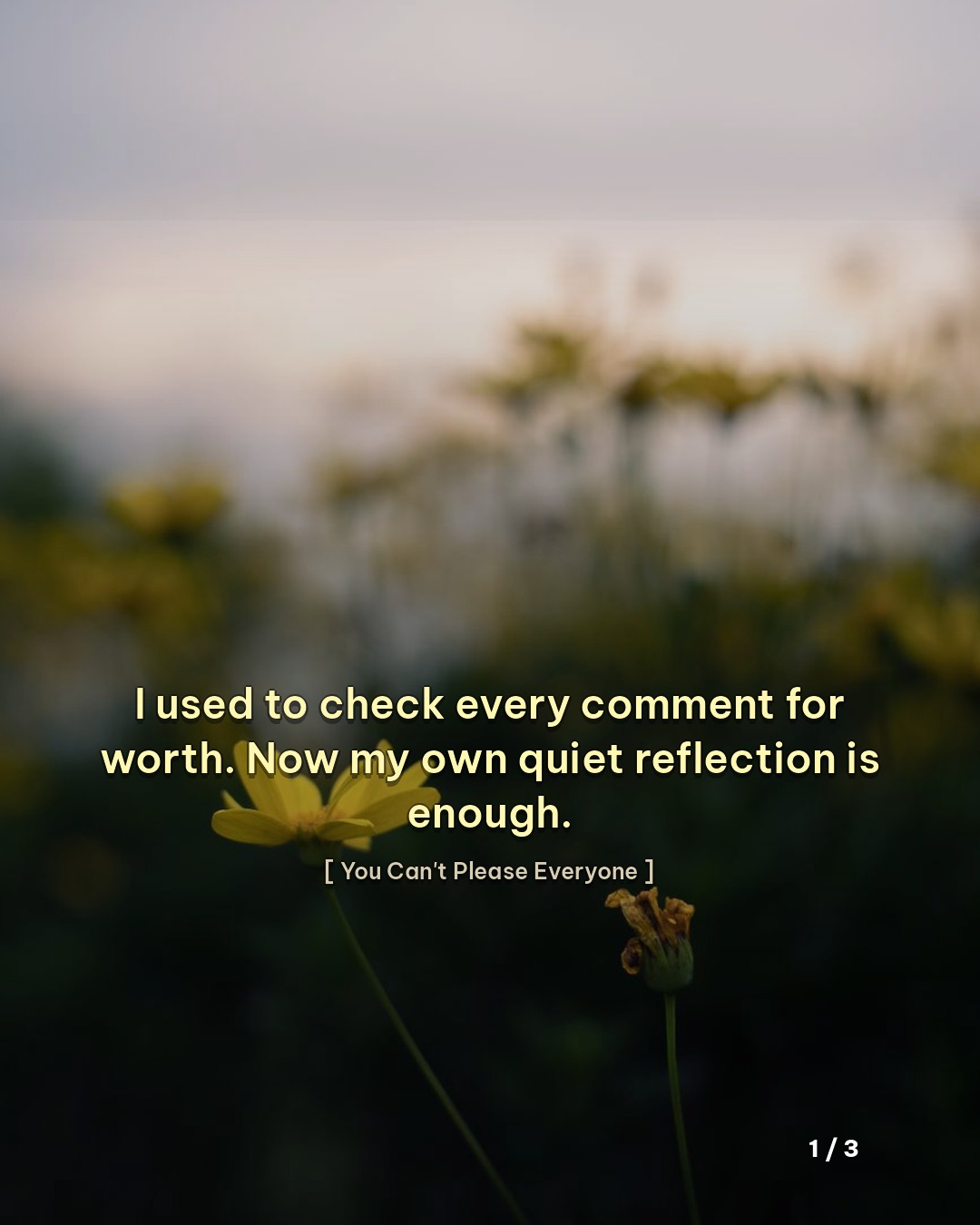


From Seeking External Echoes to Finding Inner Resonance
In an increasingly connected world, where likes, shares, and comments serve as constant metrics of perceived value, the temptation to gauge our worth through external feedback has become almost irresistible. Many of us find ourselves caught in a silent, often subconscious, ritual: checking our phones, scrolling through feeds, or replaying conversations, all in search of that elusive affirmation. This isn't just a modern phenomenon; it’s an ancient human need for belonging, amplified by digital platforms. The problem arises when this quest for external validation becomes the primary source of our self-esteem, turning our sense of worth into a fragile commodity dependent on the fluctuating opinions of others. This exhausting cycle often leaves us feeling perpetually inadequate, forever chasing a moving target.
Vex King’s "You Can't Please Everyone" offers a powerful antidote to this pervasive struggle. The book guides readers through the profound shift from a life dictated by external approval to one rooted in self-trust and self-worth. It challenges the deeply ingrained belief that our value is derived from how others perceive us, instead advocating for an internal compass that directs our sense of self. This isn't an overnight transformation; it’s a journey of unlearning years of conditioning and building a robust inner foundation. The true peace, as King illustrates, doesn't come from receiving a perfect score of external praise, but from reaching a quiet acceptance within ourselves, a state where our own reflection, unburdened by outside commentary, is truly enough.
The Costs of External Validation
When our worth is tied to external feedback, we essentially give away our power. This can manifest in several detrimental ways:
- **Emotional Volatility:** Our mood and self-perception become highly dependent on others' reactions, leading to emotional highs and lows.
- **People-Pleasing:** We modify our behavior, opinions, and even desires to fit what we believe others want, sacrificing authenticity.
- **Anxiety and Insecurity:** The constant need for approval fosters a persistent sense of anxiety and an underlying fear of not being good enough.
- **Loss of Direction:** Without an internal compass, we can lose touch with our true desires and purposes, always adapting to external demands.
- **Shallow Connections:** Relationships built on pleasing others rather than genuine connection often lack depth and sustainability.
Cultivating Internal Validation
The journey towards internal validation is an intentional practice of redirecting focus from the outside in.
- **Self-Awareness:** Recognize when you are seeking external approval. What triggers this need? What feelings arise?
- **Identify Your Values:** What truly matters to you, independent of others' opinions? Align your actions with these core values.
- **Practice Self-Compassion:** Treat yourself with kindness and understanding, especially when you make mistakes or feel vulnerable. This counteracts the harsh inner critic that often drives the need for external praise.
- **Set Boundaries:** Learning to say "no" or to protect your time and energy reinforces your self-worth and autonomy.
- **Mindful Reflection:** Spend time in quiet introspection. Journaling, meditation, or simply sitting in silence can help you connect with your inner wisdom.
- **Celebrate Small Wins:** Acknowledge your efforts and achievements, no matter how small, based on your own internal metrics, not just external praise.
The Freedom of the Inner Mirror
The shift from checking every comment for worth to finding enough in your own quiet reflection is a liberation. Imagine the mental and emotional energy freed up once you no longer expend it deciphering others' opinions or crafting an image to please them. This freedom allows you to:
- **Act Authentically:** You can make choices aligned with your true self, rather than performing for an imagined audience.
- **Build Resilience:** Criticism or rejection from others becomes less destabilizing because your core self-worth is not dependent on it.
- **Deepen Relationships:** Genuine connections are built on mutual respect and authenticity, not on one person constantly seeking approval.
- **Find True Peace:** The incessant chatter of external expectations quietens, replaced by a calm, steady inner knowing.
This isn't to say that feedback or connection with others isn't valuable. It means that external input becomes an addition to your well-being, rather than the foundation of it. When your own quiet reflection confirms your worth, when you can look at yourself and know that you are enough, a profound and unshakable peace settles within. This internal validation is not a destination, but a lifelong practice, a gentle but firm commitment to honoring the most important opinion: your own.