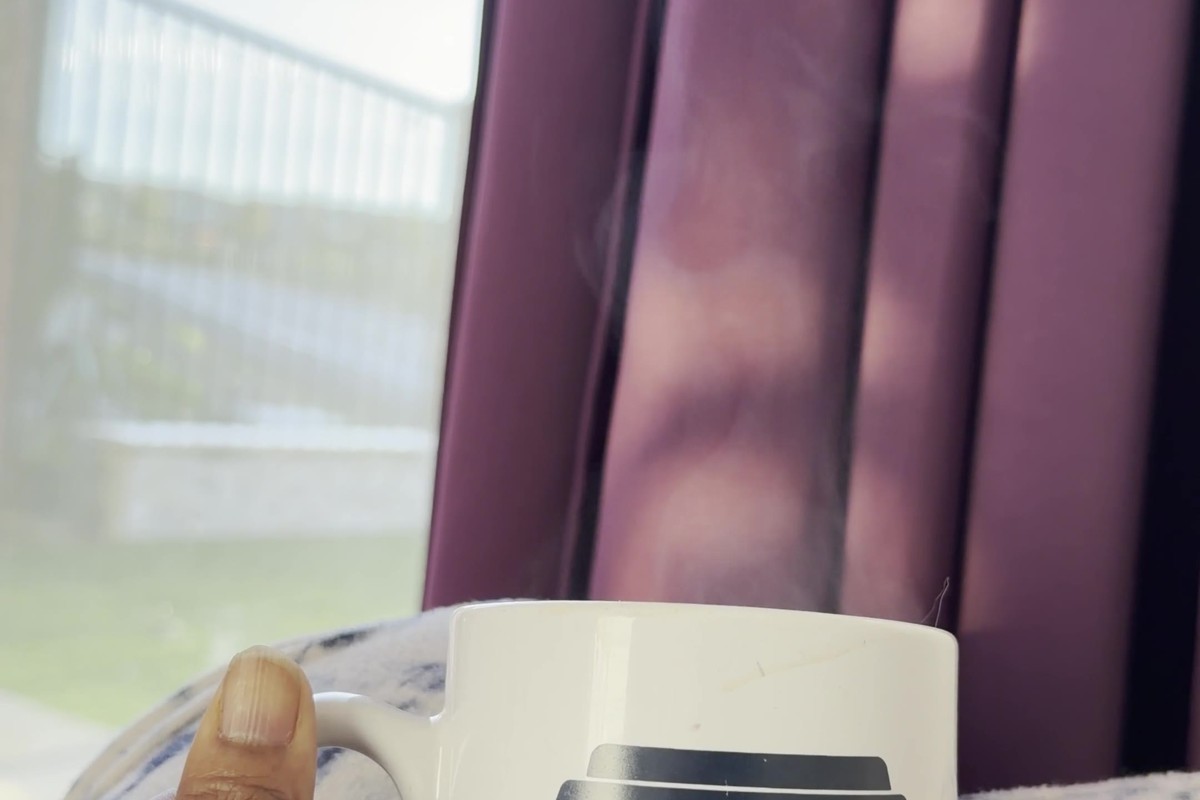
The steam from my cooling mug of tea fogged the windowpane, tracing a slow, uneven path downwards. Outside, a persistent drizzle had set in, blurring the edges of the maple trees that lined the street. My fingers, still warm from clutching the mug, tapped a restless rhythm on the worn fabric of the armchair. The silence in the house felt heavy, a thick blanket woven from unspoken anxieties and the quiet hum of the refrigerator in the kitchen. I remembered looking down at the book in my lap, its pages feeling unexpectedly light despite the weight of the subject matter. My breath hitched slightly, a familiar tightness settling in my chest, a constant companion during those months. I hadn't even consciously picked up the book that day, just found my hand reaching for it, almost instinctively, as I sank deeper into the cushion. The cover, a simple design with a soft, inviting color, seemed to promise something gentle, something I desperately needed but hadn't quite known how to ask for.
I traced the title with a fingernail, the words feeling foreign yet strangely compelling. The idea of "self-compassion" felt a bit like a foreign language at the time, something academic and distant, certainly not for someone mired in the very human, messy reality of personal upheaval. Each day felt like navigating a landscape suddenly stripped of all its familiar landmarks, leaving me adrift and increasingly critical of every misstep. The tiny dust motes dancing in the weak light filtering through the clouds seemed to mock my own inertia. I just sat there, sometimes for hours, the book remaining closed, a silent observer to my quiet despair, until one afternoon, the sheer exhaustion of my own internal monologue finally pushed me to just open it.
The Idea That Stayed With Me
The core idea that truly permeated my defenses and started to shift things for me wasn't about being "nice" to myself in some superficial, indulgent way. It was far more profound, rooted in the understanding that self-compassion is comprised of three distinct, yet interconnected, components: self-kindness, common humanity, and mindfulness.
Self-kindness, as Kristin Neff describes it, is the direct antidote to the often brutal self-criticism we inflict upon ourselves, especially during moments of perceived failure or suffering. Instead of attacking myself for not being "enough" or for making a mistake, the invitation was to treat myself with the same warmth, understanding, and patience I would naturally offer a dear friend in a similar situation. It wasn't about denying my pain or pretending everything was fine; it was about acknowledging the pain, just as I would acknowledge a friend's distress, and responding with gentleness rather than harsh judgment. It meant saying, "This is hard," instead of "You're an idiot for finding this hard."
The second component, common humanity, was perhaps the most revelatory. For so long, I had felt utterly isolated in my struggles, convinced that my particular brand of unhappiness or inadequacy was unique to me. Neff gently but firmly dispels this myth. She articulates that suffering, imperfection, and making mistakes are not personal failings that set us apart, but rather universal experiences that connect us to all other human beings. To be human is to be imperfect, to feel pain, to stumble. Realizing that my pain wasn't a solitary burden, but a thread in the vast tapestry of shared human experience, offered an unexpected sense of belonging. It allowed me to step out of the lonely echo chamber of my own self-recrimination and see myself as part of something larger, less isolated in my struggle.
Finally, mindfulness in the context of self-compassion isn't about clearing the mind or achieving a state of zen. Instead, it's about observing our suffering, our thoughts, and our emotions with a balanced awareness, without getting swept away by them or suppressing them. It’s about turning towards the pain with a gentle curiosity, rather than turning away in fear or judgment. This mindful awareness allows us to acknowledge "this hurts" without immediately adding a layer of "and it shouldn't" or "I'm bad for feeling this way." It's the space created where self-kindness and common humanity can then enter. These three elements, woven together, form a powerful framework for navigating the internal landscape with far more grace and resilience than I had ever thought possible. It wasn't about escaping pain, but about relating to it in a fundamentally different way.
When the Plan Fell Apart
I remember a particularly rough week when a project I had poured months of effort into abruptly fell apart. It wasn't a catastrophic failure on my part, but a confluence of external circumstances beyond my control. Still, the sting of disappointment felt sharp and immediate, a familiar, acidic twist in my gut. My immediate reaction was the well-worn path of self-blame. "You should have seen this coming," my internal voice hissed. "You weren't smart enough, didn't work hard enough, aren't good enough to succeed at something this important." I felt a tight knot of shame clenching my shoulders, a sense of deep inadequacy washing over me.
I walked home that evening through a cold, biting wind, pulling my scarf tighter around my neck, my thoughts racing in a relentless loop of fault-finding. As I fumbled with my keys at the door, the memory of Neff’s words, about treating myself like a friend, surfaced almost unbidden. It felt awkward, like trying on a coat that didn’t quite fit. What would I say to a friend who had just experienced this? I wouldn’t tell them they were stupid or a failure. I’d offer comfort. I'd acknowledge their effort. I'd remind them that sometimes things just don’t work out, not because of a flaw in them, but because life is unpredictable.
Standing in my quiet kitchen, the low hum of the refrigerator now a comforting drone instead of a deafening silence, I tried an experiment. I placed a hand over my heart, a gesture that felt oddly tender and vulnerable. "This is really painful right now," I murmured to myself, the words feeling clumsy on my tongue. "You worked so hard, and it hurts that it didn't pan out." And then, almost instinctively, the thought broadened: "This kind of disappointment, this feeling of things falling apart despite your best efforts, it's part of being human. Everyone experiences this kind of heartbreak." It wasn't a magical fix; the disappointment didn't vanish. But the sharp, self-inflicted edge of the pain softened. The shame began to recede, replaced by a quiet, aching sadness that felt more manageable, more human. It was like realizing I had been fighting a battle on two fronts – the actual problem and my own harsh judgment of it – and suddenly, one of those fronts had gone quiet. The raw emotional landscape was still there, but I was facing it not as an enemy, but as someone worthy of kindness, just like anyone else. That moment, standing by the kitchen counter with my hand on my chest, was a quiet, powerful turning point. It didn't solve the project issue, but it profoundly changed how I related to my own internal experience of it.
What I'd Tell Someone Starting This Book
- Don't approach this book expecting a quick fix or a permission slip for self-indulgence; true self-compassion is an active, often challenging practice of facing your pain with kindness.
- Pay close attention to the common humanity aspect; understanding that your suffering connects you to others, rather than isolates you, can be a profound shift.
- Start small with the exercises, perhaps just noticing how you speak to yourself after a minor mistake or disappointment, and gently attempting to reframe it.
- Be patient with yourself if the concept feels foreign or uncomfortable at first; it's a deeply ingrained habit for many of us to be our own harshest critics, and undoing that takes time.
- Remember that self-compassion isn't about ignoring or excusing your flaws, but about acknowledging them from a place of warmth and understanding, which surprisingly, often makes meaningful change more possible.