The radiator in my tiny apartment hissed, a sputtering, half-hearted attempt to push back the chill of a particularly unforgiving winter. I was wrapped in an old, scratchy blanket, the kind that had seen too many Netflix binges and too many quiet tears. On the chipped coffee table, amidst a scattering of empty tea mugs, lay a stack of overdue bills and a single, dog-eared paperback. The pages smelled faintly of damp cardboard and something else I couldn't quite place – maybe desperation, maybe a faint hope.
Outside, the city was a smear of grey, the sky a bruised purple that matched the mood that had clung to me for weeks. My hands, usually busy, were clasped tightly around a lukewarm cup of chamomile, the warmth barely penetrating the cold dread that had settled in my chest. Each day felt like slogging through deep mud, every interaction a potential landmine. I was tired, profoundly tired, not just physically, but deep in my bones, weary of the constant internal monologue that critiqued my every move, every thought, every word spoken or left unsaid.
That book, lying there, felt like a last resort. I hadn't been a "self-help" person, but the usual paths felt closed off, and I was looking for anything that might offer a different lens, a way to breathe without that constant weight. My gaze drifted to the title, then to the worn cover, and with a sigh, I picked it up, feeling the familiar heft of paper and ink. It was a tangible thing, something to hold onto when everything else felt like it was slipping.
The Idea That Stayed With Me
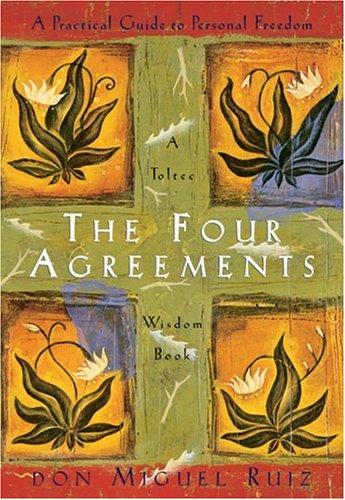
Don Miguel Ruiz speaks about his agreements as a path to personal freedom, a way to shed the self-limiting beliefs and the "domestication" that stifles our authentic selves. The first agreement, "Be Impeccable with Your Word," resonated most deeply with me during that difficult period. It's not merely about telling the truth, though honesty is certainly a component. It’s about recognizing the astonishing power of language itself, the incredible force our words wield, both externally in how we communicate with others and, perhaps even more crucially, internally in how we talk to ourselves.
Ruiz describes the word as pure magic, a fundamental force that can create beautiful realities or sow seeds of destruction. When we are impeccable, we use this power constructively, truthfully, and with integrity. When we’re not, our words become poison, spreading negativity, gossip, and judgment, often starting with the harsh judgments we hurl at our own reflection. This concept expands beyond spoken language; it encompasses every thought we entertain, every label we assign ourselves or others, every promise we make (or break) – these are all manifestations of our word, shaping our inner and outer worlds.
For me, the core insight was understanding that this impeccability extends most urgently to self-talk. The silent narratives running through my mind, the stories I constantly told myself about my worth, my failures, my capabilities – these were words too, powerful words that were actively shaping my entire reality. The idea was that if I could clean up my internal language, make it more aligned with truth and respect rather than fear and self-condemnation, then my external experience would inevitably begin to shift. It was a profound change from viewing words as mere communication tools to understanding them as fundamental building blocks of experience and identity. It meant taking responsibility for every single utterance, every internal monologue, and seeing its immense, palpable impact.
When the Inner Critic Wouldn't Shut Up
I remember a specific morning, a few weeks after I’d first read that section. I had an important presentation at work, one I’d been dreading for days. The night before, I’d barely slept, my mind racing through every possible scenario of failure, replaying past mistakes like a broken record. As I stood in front of the mirror, adjusting my shirt, the internal barrage began: "You're going to mess this up. You’re not smart enough for this. Everyone will see through you. You always crumble under pressure." It was a familiar, toxic script, one I’d replayed countless times, eroding my confidence before I’d even stepped out the door.
Normally, I’d just let it run, a dark background hum to my day, feeling its corrosive effects settle into my shoulders. But that morning, something shifted. The concept of "impeccable with your word" flashed into my mind, and I suddenly saw those self-deprecating thoughts not as inconvenient truths, but as acts of verbal violence against myself. I was using my own 'word' – my internal dialogue – to tear myself down, to poison my own potential, to sabotage myself before anyone else even had a chance. It was an involuntary, deeply ingrained habit, but seeing it as a choice, as a *use* of my power, was startling and uncomfortable.
I didn't miraculously transform into a beacon of self-love overnight. The fear and anxiety didn’t vanish in a puff of smoke. But I stopped. I literally stopped, mid-sentence of my internal monologue. I looked at myself in the mirror and, though it felt absurd, I mentally said, "No. That’s not impeccable. That’s not true. I am prepared. I am capable." It wasn't a roar of confidence, more like a quiet, firm correction, a gentle redirect of an energy that had habitually been turned against me. The fear didn't disappear, but the *intensity* of the self-criticism lessened. It was like I’d turned down the volume on the negative channel. The presentation wasn't perfect, but I didn't crumble. I delivered it, I answered questions, and I walked out feeling a little lighter, a little more present. It wasn't about erasing the fear, but about refusing to amplify it with my own careless, self-inflicted words.
What I'd Tell Someone Starting This Book
- Don't rush through the first agreement, "Be Impeccable with Your Word." It seems deceptively simple, but it’s the foundational cornerstone for everything else, and it takes real time and introspection to internalize how deeply your language shapes your reality.
- Pay close attention to your internal dialogue for a full day. You might be shocked at the sheer volume of judgments and criticisms you direct at yourself and others without even realizing the constant internal chatter.
- Try practicing the agreements one at a time, for a week or two each, before moving on. Trying to apply all four simultaneously can feel overwhelming and dilute their individual, profound impact.
- Expect resistance from your old thought patterns. Your mind has ingrained habits, and consciously choosing to change your internal narrative will feel awkward and unnatural at first. That’s a good sign you’re actively doing the work.
- Don't aim for perfection. The goal isn't to never have a negative thought, but to notice it, acknowledge it, and then consciously choose not to empower it with your continued internal 'word,' letting it pass without attachment.