The chill of a late autumn morning still clings to the air, even with the sun making a weak attempt to break through the bare branches. I'm wrapped in an old, faded wool scarf, the kind that smells faintly of woodsmoke and old books, sitting on a slightly damp bench in the park. My coffee, lukewarm now, sits forgotten beside me. I've been here for a while, just watching the last few determined leaves tumble from the oak trees, thinking about all the ways I’ve tried to shape myself into something palatable, something easily digestible for others.
It’s a peculiar ache, this constant feeling of needing to prove your worth, to earn your place. Like there’s an invisible checklist you’re always failing to complete, no matter how many boxes you tick. For years, I believed that if I just worked harder, achieved more, or presented a perfectly composed facade, I would finally arrive at a place of unquestionable belonging. A place where the anxiety about being 'enough' would simply… dissolve.
The truth is, all that effort only ever deepened the ache, carved out a hollow space where genuine connection should have been. It’s like trying to force a wild river into a perfectly straight, manicured canal – the energy required for containment eventually exhausts the river itself, diminishing its natural flow and power. That morning, watching the leaves let go so effortlessly, it felt like a tiny, quiet rebellion within me: a small part of my soul just wanted to drop the act.
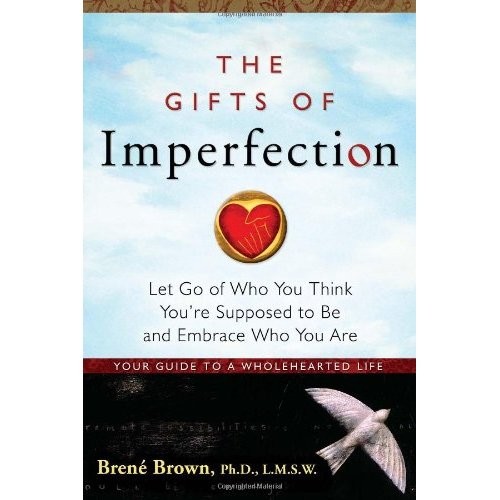
What The Gifts of Imperfection Actually Says About Worthiness
Brené Brown’s *The Gifts of Imperfection* fundamentally challenges the pervasive cultural narrative that tells us our worth is conditional, something to be earned. She argues that true belonging and self-worth are not something we achieve *after* we've become perfect or exceptional; rather, they are inherent. We are already worthy. The core message revolves around what she calls "Wholehearted Living," a way of engaging with the world from a place of worthiness. This isn't about ignoring flaws or pretending everything is fine, but about embracing our imperfections, leaning into vulnerability, and cultivating self-compassion.
Brown identifies ten guideposts for Wholehearted Living. Two of the most central to the idea of inherent worthiness are cultivating self-compassion and letting go of perfectionism. She distinguishes self-compassion from self-esteem, noting that self-esteem is often tied to external achievements or comparisons, while self-compassion is about treating ourselves with the same kindness and understanding we would offer a good friend experiencing a difficult time. Perfectionism, she explains, is not about striving for excellence; it's a defensive, self-destructive shield, a desperate attempt to earn approval and avoid criticism. It’s a belief that if we *do* everything perfectly, we can avoid shame and judgment. This ultimately keeps us from authentic connection and from ever feeling "enough."
Another critical guidepost is cultivating authenticity and letting go of what people think. This directly links to the quote: if we are truly worthy, we don’t need to perform or pretend. Authenticity means showing up as who we are, even if it's messy or imperfect, and trusting that our true selves are enough. This requires courage because it means embracing vulnerability, which Brown defines as uncertainty, risk, and emotional exposure. It's the willingness to be seen, deeply seen, with our imperfections, without guaranteed outcomes. By understanding and practicing these guideposts, Brown posits that we can move away from a scarcity mindset – the fear that we are not smart enough, pretty enough, thin enough, or good enough – and towards a mindset of sufficiency and inherent worth. The goal is not to eliminate struggle, but to learn to navigate it from a place of genuine self-acceptance and connection.
Why This Felt Like Unlearning Everything
Reading this book wasn't an instruction manual; it felt more like a slow, deliberate untangling of knots I didn't even realize were there. The knots of expectation, of comparison, of this deep-seated belief that if I just pushed a little harder, held myself a little tighter, I would finally be *acceptable*. It hit me how much energy I'd poured into constructing a version of myself I thought the world wanted, a version that felt thin and brittle. It wasn't about a sudden breakthrough moment, more like a long, quiet sigh of recognition. The idea that belonging isn't something you earn, but something you carry within you, regardless of external validation, was honestly radical. It's still something I revisit, especially on days when the old impulses to "prove myself" creep back in. It’s a quiet whisper, a reminder to just *breathe* and let things be.
Key Takeaways
- Your worthiness is inherent, not conditional; it doesn't need to be earned or proven.
- Perfectionism is a shield against shame, not a path to excellence, and it disconnects us from others.
- True self-compassion means treating yourself with kindness, especially during moments of struggle, not waiting for perfection.
- Vulnerability is the courage to show up as your authentic self, imperfections and all, and it's essential for deep connection.
- Letting go of what people think is crucial for cultivating authenticity and living a Wholehearted life.
- Struggle is part of the human experience; the goal is to navigate it from a place of self-acceptance.
Should You Read The Gifts of Imperfection?
If you’ve ever felt like you’re constantly striving for an elusive "enough," or find yourself exhausted by the effort of trying to present a flawless version of yourself, then yes, this book might resonate deeply. It's not a quick fix or a step-by-step guide to instant happiness. Instead, it offers a gentle, yet powerful, framework for understanding how we relate to ourselves and the world. It’s for anyone ready to explore the messy, beautiful truth of who they are and brave enough to believe they are already worthy of love and belonging, exactly as they are. It’s a book to read slowly, to underline, and to return to often.