
There’s a particular kind of quiet that settles when the rain starts, not a downpour, but a steady, persistent drumming against the windowpane. It was one of those afternoons, the kind where the grey light softens everything, and the world outside feels hushed. I was curled up on the sofa, a half-finished book in my lap, and for some reason, the silence felt heavy. Not empty, but full of all the unspoken things, all the ways I felt like I was constantly performing, constantly editing myself for an audience I couldn’t even see.
For a long time, my default setting was 'try harder.' Try harder to be perfectly put together, perfectly smart, perfectly kind, perfectly *fine*. The exhaustion that came with that was a dull ache I barely noticed anymore, just assumed it was part of being a grown-up. But in that quiet rain, something shifted. It wasn’t a sudden breakthrough, more like a slow, quiet unraveling of a tightly wound knot. A memory surfaced of a conversation where I’d held back, where I'd edited my truth to fit what I thought someone else wanted to hear, and the emptiness it left afterwards.
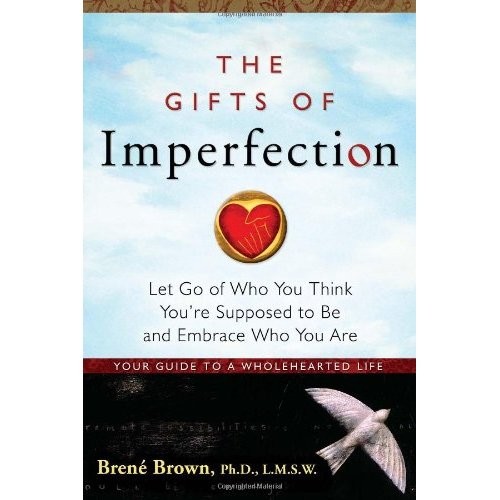
What The Gifts of Imperfection Actually Says About Vulnerability
Brené Brown's *The Gifts of Imperfection* completely reframes the concept of vulnerability, moving it from a perceived weakness to an essential act of courage and the cornerstone of wholehearted living. For so many, vulnerability is synonymous with exposure, with being hurt, or with appearing weak. Brown challenges this deeply ingrained cultural narrative, arguing that true strength lies not in invulnerability, but in the willingness to be seen authentically, even when the outcome is uncertain. She defines vulnerability not as oversharing or weakness, but as uncertainty, risk, and emotional exposure. It's the emotional risk you take every time you express an opinion that might be criticized, love someone without guarantee of reciprocation, or ask for help.
Crucially, Brown connects vulnerability directly to worthiness. She posits that in order to truly feel worthy of love, belonging, and joy, we must allow ourselves to be vulnerable. This means letting go of the need for perfection and embracing our imperfections. When we try to armor ourselves against vulnerability, we also inadvertently numb ourselves to joy, connection, and belonging. The book introduces the idea of 'shame resilience,' which is the ability to practice empathy, cultivate self-compassion, and tell our stories to people who have earned the right to hear them. It's through this process of being vulnerable that we forge genuine connection, because it allows others to see our shared humanity and struggles. Her work extends beyond this single book, with *Daring Greatly* further exploring the concept of stepping into the arena and facing criticism, and *Rising Strong* detailing how to get back up after emotional falls – all built on the foundation that vulnerability is at the heart of living a full life.
The Quiet Shift
For years, I associated vulnerability with oversharing or being dramatic, something to be avoided. Like a bruise, it felt like something to hide, to cover up, to pretend wasn’t there. The idea that showing up as my messy, unsure self was actually an act of courage felt counterintuitive. It was like someone had flipped a switch on a light I didn’t even know was off. I started noticing the small ways I was constantly trying to control perceptions, the careful phrasing in emails, the way I’d deflect compliments, the endless self-criticism disguised as self-improvement. The real shift happened not in a grand gesture, but in quiet moments: admitting to a friend I was struggling, not having all the answers at work, or simply allowing myself to feel disappointment without immediately trying to 'fix' it. It wasn't about seeking pain, but about releasing the exhausting grip of trying to avoid it, and finding a strange kind of freedom in that surrender.
Key Takeaways
- Vulnerability is not weakness; it's the emotional courage to show up fully in an uncertain world.
- True connection stems from our willingness to be seen, imperfections and all.
- Armor against vulnerability also blocks joy, belonging, and love.
- Worthiness is innate and not something that needs to be earned through perfection.
- Practicing shame resilience involves cultivating self-compassion and reaching out to trusted people.
- Letting go of who you think you *should* be allows you to embrace who you *are*.
Should You Read The Gifts of Imperfection?
If you've ever felt the pressure to be perfect, or found yourself holding back for fear of judgment, *The Gifts of Imperfection* is a book that might feel like a warm embrace and a firm nudge all at once. It’s not a quick-fix guide to becoming fearless, but rather an invitation to a deeper, more authentic way of living. It's for anyone tired of the exhausting pursuit of 'enough' and ready to explore how embracing imperfection can actually lead to a richer, more connected life. If you're looking for research-backed insights into shame, courage, and true belonging, and are open to challenging your own perceptions of strength, this book is absolutely worth your time.