I remember staring at that blank document, my cursor blinking mockingly, trying to outline the proposal for the new community project. It wasn't just another task; it was something I deeply believed in, something personal. My biggest fear wasn't failing the project itself, but failing to be seen as competent, as polished. What if my ideas weren't fully formed? What if I exposed a part of myself that felt... unready? The self-talk was brutal: 'It's not perfect enough. Wait until it's flawless. Don't show them anything less than your absolute best.'
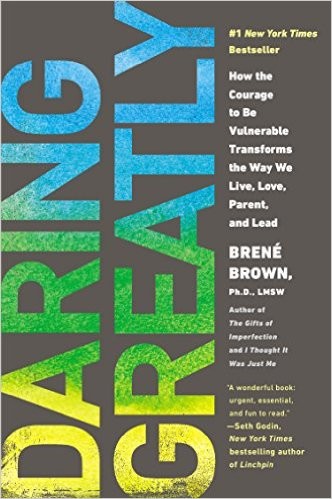
It was around that time I'd picked up Brené Brown's *Daring Greatly*. I'd heard the buzz, but reading it felt like she was speaking directly to my inner critic. Her words about vulnerability not being weakness, but the most accurate measure of courage, hit me hard. She talked about perfectionism as a shield, a way to avoid judgment and shame. It was a realization that felt like a punch to the gut, because I’d always worn that shield so proudly.
There was a team meeting scheduled for that Friday. The proposal wasn't 'ready' by my impossibly high standards. My gut instinct screamed, 'Postpone! Refine! Polish!' But then I remembered Brown's distinction between perfectionism and healthy striving. Perfectionism, she wrote, is about 'what will people think?' Daring greatly, on the other hand, is about showing up and being seen, even when there are no guarantees. It was terrifying, but the alternative—hiding my true effort until it was 'perfect'—felt even worse after reading her book.
So, I walked into that meeting. My heart was pounding, honestly. I brought my half-finished outline, a few scribbled notes, and took a deep breath. I started by saying, 'This isn't a final proposal. This is where my heart is, and I wanted to share these initial thoughts to get your input, even though they're still messy and evolving.' My voice wavered a little at first, exposing my own vulnerability.
And then... a strange thing happened. Instead of judgment, I got engagement. People asked questions, not critical ones, but curious ones. They offered suggestions, built upon my 'messy' ideas, and contributed their own vulnerabilities by admitting they'd faced similar challenges on past projects. The conversation became rich, collaborative, and genuinely productive in a way that my 'polished' presentations rarely were. I walked out of that room feeling lighter, not because the project was complete, but because I had dared to show up as I was, imperfections and all. It wasn't about being perfect; it was about being present and real. And that, I realized, was where the real strength lay.