I remember staring at my computer screen, the cursor blinking mockingly on a blank document. It was late, past midnight, and a huge project deadline loomed. Everything felt wrong. My team wasn't coordinating, the client had changed their mind twice, and honestly, I felt like I was drowning in a sea of other people's incompetence and external pressures. My internal monologue was a symphony of blame: 'If only X had done Y,' 'Why did Z change that at the last minute?' I was a victim, pure and simple, and it felt utterly debilitating.
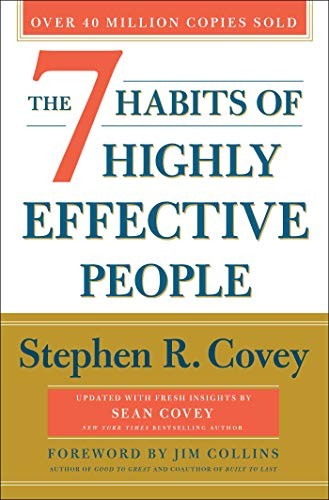
Then, a phrase popped into my head, clear as a bell, from a book I'd read years ago: 'Be Proactive.' Stephen Covey's "The 7 Habits of Highly Effective People" wasn't a book I'd constantly referenced, but that one habit, in that moment, hit me with the force of a revelation. I was allowing external circumstances and other people's actions to completely dictate my emotional state and my response. I was squarely in the 'circle of concern,' fixating on things I couldn't control, and neglecting my 'circle of influence.'
It wasn't a sudden, magical fix. My problems didn't disappear. But the internal shift was immediate. I physically pulled back from the screen, took a deep breath, and asked myself: 'What *can* I do right now, even if it's tiny?' The answer wasn't to magically fix everyone else or rewind time. It was to take ownership of my *own* next step.
Instead of stewing, I opened a fresh document. I wasn't going to tackle the whole project. I was going to list out every single thing I *could* control related to it, no matter how small. My action items, my communications, my part in the presentation. I started by drafting an email to my team, not a blaming one, but a proactive one: outlining the current state, acknowledging the challenges (without assigning blame), and proposing concrete next steps *from my end*, offering specific support. I then blocked out the first two hours of my next morning solely for one specific, achievable task within the project.
It sounds simple, almost mundane. But the feeling that washed over me was profound. It wasn't a sudden burst of energy, but a quiet, steadying sense of agency. I wasn't waiting for someone else to fix it; I was *starting* to fix what I could. The pressure didn't vanish, but my internal response to it transformed from helpless victimhood to empowered participant. That night, I didn't solve the project, but I reclaimed my sanity and, more importantly, my personal power. It was a powerful, real-world lesson in what it truly means to be proactive.