The afternoon light, thin and watery through the blinds, barely touched the stack of papers on my desk. I remember the exact weight of the phone in my hand, heavy, a cold rectangular stone after another conversation that left me feeling wrung out and utterly alone. My shoulders were tight, pulled up towards my ears, a familiar posture from years of bracing for impact. The quiet hum of the refrigerator in the kitchen sounded louder than usual, a constant, low thrum against the ringing silence in my own head. My gaze drifted to the window, watching a single leaf, brown and crisp, skitter across the patio in a tentative breeze. It was late autumn, and everything felt like it was retreating, tightening its grip against the coming cold. That’s how my relationships felt, too – a series of anxious grasps and sudden, inexplicable withdrawals.
I’d been circling the same emotional drain for years, each relationship following a painfully similar trajectory. Initial excitement, a dizzying rush of closeness, then an inevitable tightening, a feeling of being misunderstood, followed by a slow, agonizing pull apart. I felt like I was constantly trying to solve a puzzle with missing pieces, or worse, with pieces that didn’t belong to the same picture. There was a particular sting to the frustration because I genuinely *wanted* to connect, deeply and authentically. Yet, the harder I tried, the more tangled things seemed to become, leaving me exhausted and questioning what was so fundamentally wrong with me. I started to wonder if I was simply incapable of the kind of stable, loving partnership I saw others effortlessly maintain.
The Idea That Stayed With Me
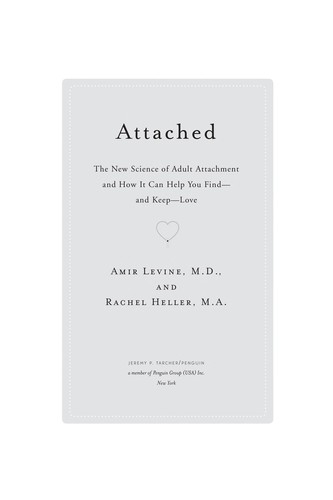
“Attached” by Amir Levine and Rachel Heller didn’t offer a quick fix or a magical spell. What it offered, instead, was a framework, a lens through which to view the bewildering landscape of human relationships. Its central, most profound idea for me was the concept of adult attachment styles: how our fundamental need for connection, shaped by our earliest experiences, continues to play out in our romantic partnerships. It posited that most of us fall into one of three main styles – secure, anxious, or avoidant – and these styles aren't character flaws but rather deeply ingrained strategies for relating to others when our sense of safety or connection feels threatened. It’s not about judging these styles, but understanding their roots and how they influence our reactions, needs, and communication in intimate relationships.
The book eloquently explains that those with an anxious attachment style often crave closeness and intimacy but worry about their partner’s availability and responsiveness. They might become preoccupied with the relationship, seeking reassurance or trying to bridge perceived gaps in connection. On the flip side, avoidant individuals tend to value independence and self-sufficiency, often feeling uncomfortable with too much intimacy and withdrawing when a relationship feels too demanding or close. They might interpret a partner’s bid for closeness as an encroachment on their freedom. Secure individuals, the book suggests, are comfortable with both intimacy and independence, able to communicate their needs effectively and respond sensitively to their partner’s. This wasn't just a typology for me; it was an explanation for the push-pull dynamics I had witnessed and participated in my whole life. It suggested that our behavior, which often feels chaotic and reactive, is actually quite predictable once you understand the underlying attachment needs and fears. It offered a profound shift from personal failing to an understandable, if sometimes unhelpful, response pattern developed to manage the inherent vulnerability of human connection.
The Silent Retreat
I remember one evening, about six months after I'd first picked up “Attached,” sitting across the dinner table from a new partner. We’d had a mild disagreement that afternoon, nothing major, but enough to create a slight chill in the air. As the evening progressed, I felt that familiar tightness in my chest, a low thrum of anxiety starting up. My partner, usually quite talkative, had become quiet, absorbed in their food, offering only monosyllabic answers to my attempts at conversation. In the past, this would have sent me spiraling. My mind would conjure scenarios of rejection, of impending abandonment. I would have felt an urgent need to “fix” the silence, to ask repeatedly what was wrong, to press for reassurance, probably escalating the tension further.
But that night, something was different. As I watched them, seemingly lost in their own thoughts, the word “avoidant” gently surfaced in my mind. Not as a label to judge, but as a possible explanation. I remembered the book’s descriptions of how avoidant individuals often need space to process emotional discomfort, how they might retreat internally when feeling overwhelmed or pressured. The silence at the table, which I used to interpret as a direct accusation or a sign of fading affection, suddenly felt less personal. It still wasn't comfortable, but the intense, gut-wrenching panic that usually seized me was absent. Instead of launching into a desperate interrogation or constructing elaborate scenarios of doom, I just… sat with it. I finished my meal, feeling the warmth of the food, hearing the clink of silverware. I didn't push. Later that night, my partner initiated a conversation, apologizing for being distant and explaining they’d just needed a moment to themselves. The emotional explosion I’d been so conditioned to expect never happened. It was a quiet, unassuming moment, but for me, it was a seismic shift. It was the first time I hadn't taken the silence as a personal indictment, and it opened a tiny, vital space for something else: understanding.
What I'd Tell Someone Starting This Book
- Don't approach it like a diagnostic tool to label yourself or others; see it as a compassionate framework for understanding human behavior in relationships.
- Pay close attention to the descriptions of anxious and avoidant styles, even if you identify as secure. Understanding the dynamics between different styles is crucial.
- Be prepared for some uncomfortable self-recognition. It's okay if certain patterns make you wince a little; that’s where the real growth starts.
- Don’t use your newfound knowledge to excuse unhelpful behavior, either your own or a partner’s. It's a tool for awareness, not a pass for poor communication.
- Remember that these are tendencies, not fixed prisons. Recognizing your style is the first step toward consciously shifting how you engage and respond in relationships.