
The chill of the glass against my cheek. Rain streaked down the windowpane, blurring the city lights into impressionistic smudges. I was curled on the worn sofa in my tiny studio apartment, a half-empty mug of tea growing cold on the coffee table. The blue light from my phone cast a harsh glow on my face, illuminating the endless, sterile parade of profiles on the dating app. Each swipe felt heavier than the last, a tiny defeat. Another promising conversation had fizzled, another connection evaporated into the ether. A familiar knot of dread tightened in my stomach, a persistent whisper that something was fundamentally wrong with *me*. It wasn't just the dating itself; it was the way each interaction seemed to echo a deeper pattern, a feeling of being perpetually adrift, never quite securing a stable emotional footing.
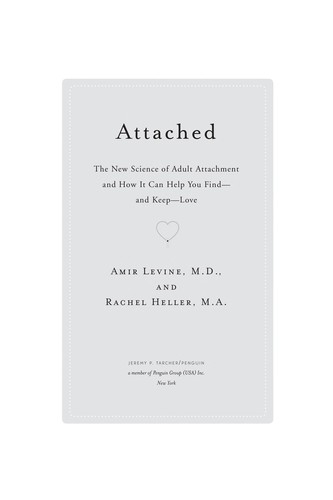
The apartment, usually a sanctuary, felt like a cage that night. The quiet magnified my racing thoughts. I could hear the hum of the refrigerator, the distant wail of a siren, and the frantic churn inside my own head: *Why does this keep happening? Am I too much? Not enough?* My fingers traced the worn binding of a book I'd picked up on a whim, a recommendation from a friend who’d seen my exasperation. "Attached," it was called. I hadn't opened it yet, too busy chasing the next fleeting interaction, convinced that the solution lay in finding the *right* person, rather than understanding the patterns I brought to every single connection. The cover felt cool and smooth under my thumb, an unassuming object holding a promise I wasn't sure I was ready to face.
The Idea That Stayed With Me
The core idea in "Attached" wasn't about finding your soulmate, or mastering some magical dating technique. It was profoundly simpler, and yet, completely revolutionary to my understanding of relationships. It posited that the ways we approach love, intimacy, and commitment in adulthood are deeply rooted in our earliest experiences with caregivers – what's known as attachment theory. The book explained that there are essentially three main adult attachment styles: secure, anxious, and avoidant.
A secure person generally feels comfortable with intimacy and interdependence, doesn't fear abandonment, and can communicate needs effectively. They trust their partner and are generally warm and loving. This sounded like some mythical creature to me at the time.
Then there were the anxious types, like myself, who tend to crave intimacy, closeness, and security, but are often plagued by fears of rejection or abandonment. We might become overly preoccupied with our relationships, seeking constant reassurance, often misinterpreting a partner's actions or distance. Our inner world is often a whirlwind of worry, and we can inadvertently push people away with our intensity, which then reinforces our fears. It felt like holding someone so tightly they couldn't breathe, only to have them pull away, confirming your worst fears, and leaving you even more desperate. The constant search for validation can be exhausting, a relentless internal demand for proof that you are loved and won't be abandoned, even when that proof is abundantly present. This often manifests as needing frequent texts, constant proximity, or seeing every small delay as a catastrophic sign of impending doom.
Finally, the avoidant types. These individuals tend to equate intimacy with a loss of independence. They might feel uncomfortable with too much closeness, often prioritizing self-reliance and emotional distance. When a relationship starts to feel too serious or demanding, they often find ways to create space, or even pull back entirely. They might genuinely care, but their internal alarm bells ring loudly when they feel "trapped" or overwhelmed by a partner's needs. This isn't usually born of malice, but from a deep-seated belief that closeness means a loss of self, a threat to their autonomy. They might crave connection on some level, but the closer it gets, the more they feel the need to escape, often sending mixed signals that leave anxious partners utterly bewildered and distraught.
What struck me most profoundly wasn't just the categorization, but the dynamic interplay between these styles. The book explains how anxious and avoidant individuals often get drawn into a "protest behavior" cycle, where the anxious person pursues closeness and reassurance, and the avoidant person retreats further, creating a painful push-pull. This wasn't about one person being "good" and another "bad"; it was about two different internal operating systems struggling to connect, often creating exactly the outcomes they most feared. It illuminated the invisible forces at play in my past relationships, making sense of so much confusion and hurt. The revelation was that understanding these styles wasn't about labeling people, but about recognizing patterns and, crucially, learning how to break them. It shifted the focus from "what's wrong with them?" or "what's wrong with me?" to "how are our styles interacting, and how can I navigate this more effectively?"
A Silent Retreat at the Coffee Shop
I remember a specific morning, a few months after I’d first read the book. I was sitting in a bustling coffee shop, waiting for a second date with someone I really liked. We’d had a fantastic first conversation, laughed a lot, and I’d felt a spark. As the minutes ticked past the agreed-upon time, my internal monologue started to spin up. *He’s late. Is he going to show up? Did I say something wrong last night? Is this already a sign?* My heart rate quickened. My palms grew slightly damp. I felt the familiar urge to pull out my phone, to text him, to "just check in," to "make sure everything was okay." It wasn’t about him being five minutes late; it was about the growing chasm of uncertainty in my chest.
Before "Attached," I would have sent that text, probably a slightly passive-aggressive one, or a falsely casual "Are you still coming?" that was laced with a desperate need for reassurance. I would have already rehearsed the breakup speech in my head, mentally preparing for the inevitable disappointment. But that morning, something was different. A small, quiet voice, an echo from the book, surfaced. *This is your anxious attachment system activating.* It wasn't a judgment, just an observation.
Instead of reaching for my phone, I took a deep breath. I looked around the coffee shop. I noticed the elderly couple sharing a pastry, the student hunched over a laptop, the barista expertly steaming milk. I grounded myself in the present moment, acknowledging the anxiety without letting it hijack my actions. I told myself, *He’s probably just stuck in traffic. Give him a moment.* It was incredibly hard. Every cell in my body wanted to leap into action, to control the situation, to eliminate the uncertainty.
Exactly seven minutes late, he walked in, a genuinely apologetic smile on his face, explaining he’d hit an unexpected snarl on the street. He didn’t offer a detailed apology; he simply acknowledged it and shifted into conversation seamlessly. And because I hadn't reacted from a place of fear and insecurity, the interaction was smooth. There was no awkwardness from my end, no subtle tension he had to navigate. I realized then that understanding my own attachment style wasn't just about understanding why I felt a certain way; it was about giving myself a choice in how I *responded* to those feelings. It was about creating space for grace, both for myself and for the other person, rather than letting ancient anxieties dictate my present. That day, I didn’t just have a good second date; I had a quiet victory over a lifelong pattern, simply by choosing to observe my internal landscape instead of being ruled by it.
What I'd Tell Someone Starting This Book
- Don't read this book to label everyone you know. Read it to understand *yourself* and your own patterns. The insight you gain into your own reactions is the most powerful takeaway.
- Pay close attention to the sections on the "protest behaviors" of anxious types and the "deactivating strategies" of avoidant types. Recognizing these in action, both in yourself and others, is key to breaking unproductive cycles.
- Be patient with yourself. Recognizing your attachment style isn't a quick fix; it's the beginning of a process of awareness and conscious choice. Old habits of thought and reaction run deep.
- Consider how your past relationships, both romantic and platonic, might have reflected these dynamics. It can be painful to look back, but the clarity is invaluable for moving forward.
- Don't use attachment theory as an excuse or a weapon. It's a framework for understanding, not a justification for bad behavior or a reason to prematurely dismiss potential connections.
