A cold, grey afternoon, the kind where the light never quite breaks through, found me curled on the sofa, a blanket pulled tight. The scent of stale coffee lingered from the morning, and my hands were restless, picking at the loose threads on the throw pillow, unable to settle. I’d been trying to make sense of why I felt so utterly frozen, even though the acute crisis had passed. My mind understood I was 'safe,' that the immediate threat was gone, but my body felt like a stone, heavy and immovable. Every task felt Herculean, every decision a monstrous weight.
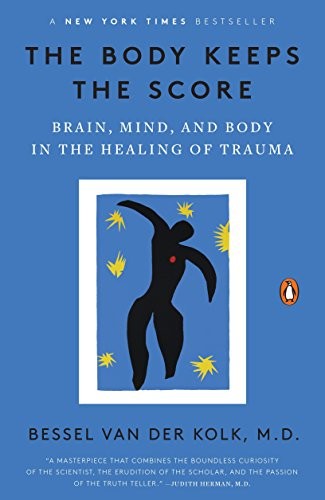
That’s when I finally picked up *The Body Keeps the Score*, a book I’d seen mentioned everywhere but hadn't quite dared to open. Part of me feared what I might find within its pages, another part was desperate for any flicker of understanding. I remember the particular passage that articulated how trauma isn't just a story we tell ourselves, a mental narrative, but a profound physiological event, an imprint in our very cells. It resonated with a deep, unsettling clarity. My constant ache in the shoulders, the shallow, constricted breathing that felt like a tight band around my ribs, the frustrating inability to just *move* through my days – it wasn't a failure of will. My body was, quite literally, keeping a score, holding onto the echoes of past overwhelm.
This wasn't a magic cure, not by a long shot. But this understanding was like a key turning in a lock I didn't even realize existed. Suddenly, instead of railing against my own physical inertia, instead of self-flagellating for not being 'over it,' I began to listen to it. I started small. Instead of trying to *think* my way out of the paralysis, which had proven useless, I’d just notice my feet on the floor, the weight of the blanket across my lap, the cool air on my skin. Sometimes, that was all I could manage for an entire day – a simple, quiet observation of what my body was experiencing in that very moment, without judgment.
It was a slow, sometimes frustrating dance of re-inhabiting myself. The book didn't hand me a step-by-step instruction manual for *my* specific recovery, but it validated what I was feeling and offered a direction when I felt utterly lost. There are still days when the physical memory feels overwhelming, when the body tightens and pulls inward, but now I know it's not a mystery. It's just a language I’m slowly, imperfectly learning to understand, one breath, one subtle shift at a time.