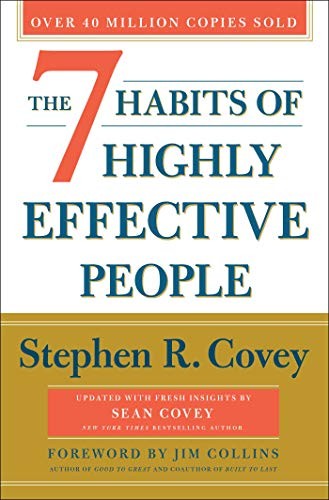
The late afternoon sun, thin and pale, would often filter through the cheap Venetian blinds, carving dusty stripes across my cluttered living room. I remember the feel of the velour armchair, threadbare at the arms, as I sank into it, the springs groaning a familiar protest. In my lap, usually, was a book. Not a novel, not a thrilling escape, but something dense, almost academic, promising a way out of the fog that seemed to cling to my days. My fingers, often stained with forgotten coffee rings from mugs left too long on the floor, would trace the outlines of the cover, a faint anxiety thrumming beneath my skin. I wasn't just reading for entertainment; I was reading for a lifeline.
At that time, my life felt like a small boat adrift, battered by waves I couldn't control. Every email felt like an urgent demand, every conversation a potential minefield, every expectation a crushing weight. I was perpetually reacting, putting out fires, exhausting myself just to stay afloat. The world felt loud, chaotic, and relentlessly external. I’d wake up already feeling behind, already dreading the cascade of demands the day would inevitably bring. My mental energy was perpetually consumed by what *might* happen, or what someone *else* might do, leaving precious little room for anything else.
I bought `The 7 Habits of Highly Effective People` not out of a belief in "self-help" as much as a desperate need for *any* help. It sat on my bedside table for weeks, a weighty sentinel, before I finally cracked it open. I expected bullet points, quick fixes, strategies I could immediately implement to optimize my life. What I found instead felt less like a guidebook and more like a profound philosophical shift, demanding a different kind of effort altogether.
The Idea That Stayed With Me
Covey’s central message, the one that truly burrowed deep and refused to leave, wasn’t about specific techniques as much as it was about a fundamental reorientation of perspective. It’s the idea that our default mode of living—reacting to external stimuli, blaming circumstances, or waiting for conditions to improve—is a trap. Instead, he presents "proactivity" not merely as taking initiative, but as recognizing our inherent freedom and responsibility to *choose our response* to whatever life throws our way. Between the stimulus and our response, there exists a space, and within that space lies our power to decide. This concept was revolutionary for me. I had spent so long believing I was a victim of circumstances: my job was stressful, therefore I was stressed; relationships complicated, therefore unhappy. Covey gently but firmly dismantles this outside-in paradigm, asserting that true effectiveness and freedom stem from an *inside-out* approach. It means taking ownership of our internal world, our attitudes, our choices, regardless of what's happening around us. He illustrates this with the powerful metaphor of the Circle of Concern and the Circle of Influence. Our Circle of Concern encompasses everything that bothers us—the economy, others’ opinions, past mistakes. Our Circle of Influence is much smaller, containing only those things we can actually do something about—our actions, our reactions, our character. The proactive person, he argues, focuses their energy on their Circle of Influence, which in turn expands it. The reactive person focuses on their Circle of Concern, allowing it to grow while their ability to act shrinks. It’s about understanding that while we can’t always control what happens *to* us, we always have agency over how we respond. This isn't just about willpower; it’s about cultivating self-awareness, conscience, imagination, and independent will—the human endowments that allow us to choose. It’s the deep conviction that the greatest freedom we possess is the freedom to choose our attitude in any given set of circumstances. That recognition, for me, was like finding a rudder for my drifting boat.
When the World Felt Too Loud to Control
I remember a particular period where this idea became profoundly real. My manager at the time was a whirlwind of unpredictable moods and last-minute demands. One afternoon, after weeks of working late on a project with shifting scope, he dropped another urgent, seemingly arbitrary task on my desk at 4:45 PM, expecting it by the next morning. My immediate, visceral reaction was a familiar cocktail of frustration, resentment, and creeping panic. My stomach tightened, jaw clenched, and I felt the familiar urge to either lash out or disappear. "This isn't fair," I thought. "He always does this. I'm being taken advantage of."
In that moment, standing with the new assignment, Covey’s words flashed through my mind: the distinction between the Circle of Concern and the Circle of Influence. My manager's personality, his erratic demands, the fairness—these were all firmly in my Circle of Concern. I couldn't change him or the immediate circumstances. But my *response*? That was entirely within my Circle of Influence. Instead of spiraling into victimhood, I took a deep breath. I chose not to let his urgency dictate my internal state or communication. I walked back to his desk, not with an angry retort, but with a calm question. "I understand this is important," I said, "and I'm committed to delivering quality work. To do that effectively with this new task, I need to understand what other priorities I should shift or defer. What is the single most important outcome you need from me by tomorrow morning, given what's already on my plate?" The conversation shifted. He still needed the task done, but my proactive approach opened a dialogue about priorities. We identified a smaller, critical component that could be done by morning, pushing the rest to the following day. It wasn't a magic fix; I still worked late, but I did so with agency, rather than resentment. I had chosen my response. I had influenced the outcome where I could, and accepted what I couldn't change without letting it dominate my inner world. It was a small victory, but it felt monumental, a demonstration of an internal shift. That evening, as the office emptied, the quiet settled. The faint anxiety still lingered, but it was no longer consuming. I felt a sense of dignity, a quiet strength that came from choosing, rather than just reacting. The velour armchair back home would feel a little less like a sinking ship.
What I'd Tell Someone Starting This Book
- Don't rush it like a novel; it's designed for deep reflection. Read a chapter, then put it down and genuinely ponder how its ideas might apply to your current struggles.
- Focus on understanding the foundational principles, especially Habit 1: Be Proactive. Without grasping this deeply, the other habits might feel like mere techniques rather than a holistic way of being.
- Keep a notebook handy as you read. Jot down your personal reactions, specific examples from your own life, and questions that arise. This isn't just theory; it's an invitation to self-discovery.
- Don't feel pressured to implement every habit perfectly from day one. Pick one or two that resonate most, and try experimenting with them in small, low-stakes situations to build confidence.
- Be prepared for discomfort. Shifting paradigms means challenging deeply ingrained beliefs about yourself and the world, and that process can feel unsettling before it feels empowering.