
The rain had been falling for hours, a relentless, drumming rhythm against the windows of my small apartment. It was late, past midnight, and the only light came from the bedside lamp, casting a warm, isolated circle around me. I was curled in an old armchair, the fabric worn smooth beneath my fingers, a mug of long-cold tea beside me on the floor. My phone lay face down on the small table, a dark, silent rectangle that I’d stared at for what felt like an eternity earlier in the evening. Each distant rumble of thunder seemed to echo the unsettling quiet that had settled between me and… well, him. It was a familiar ache, this particular brand of relational uncertainty, a gnawing worry that made my stomach clench.
I picked up the book again, the spine already softened from repeated readings, and traced the lines of text with a fingertip. I wasn’t actively reading, just letting the words wash over me, hoping some unseen truth would seep into my tired mind. The world outside felt chaotic and unwieldy, but in this quiet bubble, with the book open on my lap, there was a fragile sense of trying to understand something deeply personal, something that felt like a fundamental flaw within myself, or perhaps, within the way I approached intimacy. The pages carried a whisper of explanation, of patterns, and for the first time in a long time, a flicker of hope that the discomfort wasn't just my fault, or his.
The Idea That Stayed With Me
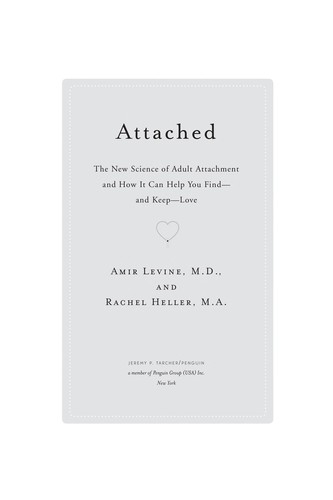
The central idea that truly burrowed its way into my consciousness from `Attached` wasn't just a revelation; it was a complete re-framing of how I understood human connection. Authors Amir Levine and Rachel Heller propose that we, as adults, operate primarily under one of three attachment styles: secure, anxious, or avoidant. It’s not a diagnostic label to trap us, but rather a framework for understanding our innate relational needs and behaviors. A secure individual feels comfortable with intimacy and independence, able to communicate needs effectively and trust their partner. An anxious person, like me, often craves high levels of intimacy, worries about their partner’s availability, and can become preoccupied with the relationship, sometimes misinterpreting signals. An avoidant individual, on the other hand, tends to equate intimacy with a loss of independence, often suppressing emotions and pulling away when things get too close.
What truly resonated was the concept that these styles aren't fixed personality traits, but rather adaptive strategies developed in response to our early experiences and continually reinforced by our adult relationships. More profoundly, the book explains how these different styles interact – often in predictable, sometimes painful, ways. An anxious person seeking reassurance might inadvertently push away an avoidant partner who feels suffocated by demands for closeness. An avoidant person’s withdrawal might trigger an anxious person’s deepest fears of abandonment, creating a self-perpetuating cycle of pursuit and distance. Understanding this dynamic was like being handed a map to a labyrinth I’d been blindly fumbling through for years. It clarified that my internal alarm bells weren't always irrational, and my partner’s seemingly cold responses weren't necessarily malicious. They were often manifestations of deeply ingrained patterns, an emotional dance we were both performing without the sheet music.
When He Didn't Text Back
There was a period, not long after I started reading `Attached`, when my partner and I were navigating one of those stretches where communication felt thin. He was under immense work pressure, and I, in turn, felt my own stress levels climb, not just from my own life, but from the perceived distance between us. One particular evening, after a brief, somewhat strained phone call, I sent a follow-up text, a simple check-in, something like, “Hope you manage to get some rest tonight. Thinking of you.” And then, silence. An hour passed, then two, then three. My phone remained stubbornly dark. My stomach started to knot itself into familiar tangles. The old script began to play: *He’s pulling away. I said something wrong. He’s losing interest.* My fingers hovered over the keyboard, already formulating another text, perhaps a slightly more pointed one, or maybe even a question designed to solicit an immediate response.
But then, a small voice, informed by the pages of `Attached`, whispered: *What if it’s not about you? What if his avoidance is an overwhelmed system protecting itself?* I paused. I envisioned his probable exhaustion, the weight of his responsibilities. The book had opened my eyes to the idea that his lack of immediate response wasn't necessarily a message about *me* or his feelings for *me*, but a default mechanism when facing overwhelm. His style leaned avoidant, and when under pressure, his instinct was to retreat into himself, to minimize external demands. My anxious attachment, conversely, interpreted this retreat as a threat, escalating my need for connection. This time, instead of sending the next text, I took a deep breath. I put the phone down, got up, and made myself a cup of chamomile tea. I allowed myself to feel the discomfort, to acknowledge the old fears, but I didn't act on them. The next morning, a text came: a brief, tired apology for falling asleep, and a promise to call later. It wasn't the effusive reassurance my anxious heart craved, but it was enough. It was real, and more importantly, it was understood in a way it never would have been before, not as a rejection, but as a pattern, one we could, eventually, talk about.
What I'd Tell Someone Starting This Book
- Read it with an open mind, not as a manual to diagnose or fix your partner, but primarily to understand yourself and your own reactions within relationships. The real work starts with self-awareness.
- Don't expect immediate magical solutions. Understanding these patterns is the first step, but changing deeply ingrained ways of relating takes time, conscious effort, and often, uncomfortable self-reflection.
- Be prepared for some moments of recognition that might sting a little. Seeing your own anxious or avoidant tendencies laid bare can be unsettling, but it’s also incredibly liberating.
- Consider discussing the concepts with a trusted friend, therapist, or even your partner if you feel safe and ready. Externalizing these internal dynamics can lead to profound breakthroughs in communication.
- Remember that everyone deserves a secure attachment, and understanding these styles can empower you to create that security, whether with a partner or within yourself.
