There's a tight knot behind my left shoulder blade that, for years, I just accepted as 'my thing.' It would flare up, a dull ache that sometimes spread up my neck, sometimes down my arm. I’d try stretches, massages, heat pads – anything to make it go away. It felt like a foreign object, a persistent nuisance. I remember vividly one morning, the knot was particularly angry. The air outside was cold and grey, mirroring how I felt inside. I had a difficult conversation looming, one I was dreading, and my body was screaming about it long before my mind allowed the actual dread to surface. My jaw, too, often felt clenched shut, a heavy, unyielding lock, even when I consciously told myself there was 'nothing to be anxious about.'
For so long, I treated my body like a separate entity, a vehicle that sometimes broke down and needed fixing, rather than an integral part of my emotional and psychological landscape. The idea that these physical sensations were not just symptoms of stress, but actual, embodied communications from a deeper self, was completely foreign. I learned to override my body, to push through discomfort, to ignore the tremors in my hands or the sudden tightness in my chest, dismissing them as mere physical annoyances. It was only when the 'annoyances' grew too loud to ignore that I started wondering if there was something more profound going on.
What The Body Keeps the Score Actually Says About Somatic Awareness
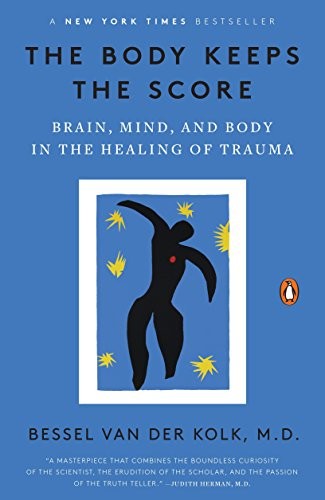
Bessel van der Kolk’s *The Body Keeps the Score* is a foundational text that revolutionized our understanding of trauma. Its central premise is that trauma isn't just a psychological event stored in our memories; it's deeply imprinted in the body itself, affecting brain structure, neurobiology, and even our physiological responses. Van der Kolk explains how traumatic experiences can disrupt the normal functioning of the brain's alarm system (the amygdala) and its memory center (the hippocampus), leading to a persistent state of hyperarousal or numbness. This manifests as chronic tension, digestive issues, sleep disturbances, and a host of other physical symptoms that often go misdiagnosed or untreated.
The book eloquently argues that while talk therapy can be helpful, it often isn't enough because the trauma is stored at a non-verbal, sensory level. Healing, therefore, requires engaging the body directly. Van der Kolk introduces the concept of *interoception*—the ability to sense what’s going on inside your body—as crucial for regaining a sense of self and safety. Trauma compromises this ability, leaving individuals disconnected from their internal states. Techniques like yoga, mindfulness, Eye Movement Desensitization and Reprocessing (EMDR), and other somatic therapies are highlighted as effective ways to help the body process and release stored trauma, thereby restoring a sense of agency and integration. The book underscores that to truly heal, we must move beyond merely understanding our story and begin to engage with the physiological impact of our past experiences.
Listening to the Whispers
Learning to listen to my body was a slow, sometimes uncomfortable process. It started with acknowledging that shoulder knot, not just trying to fix it. Instead of rubbing it away, I'd simply place my hand on it and breathe, trying to just *feel* the sensation without judgment. I’d notice the temperature, the exact quality of the ache, the subtle changes. It felt strange at first, almost like talking to a part of myself I hadn't properly introduced myself to. But gradually, those quiet moments of awareness started yielding insights. I began to notice patterns: the knot tightened when I felt unheard, the jaw clenched when I suppressed an opinion, the tremors came when I felt overwhelmed and unable to move. It wasn't about finding a quick fix for these sensations, but about understanding what they were trying to tell me.
This wasn't a linear path. There were days I'd fall back into old patterns of ignoring or intellectualizing. But each time, the memory of that quote, of the book's gentle insistence on bodily awareness, would pull me back. It felt less like a chore and more like a quiet act of self-kindness, a slow re-acquaintance with my own internal landscape. The courage it took wasn't about battling my body, but about befriending it, allowing myself to feel the discomfort without needing to immediately resolve it. This quiet act of listening has been more profound than any quick solution I ever sought.
Key Takeaways
- Trauma is stored in the body, impacting physiological functions, not just psychological well-being.
- Developing interoception, the ability to sense internal bodily states, is crucial for healing.
- Healing involves befriending and processing physical sensations, not just intellectualizing them.
- Talk therapy alone may be insufficient; somatic practices and movement are essential for releasing stored trauma.
- Our physical symptoms are often meaningful communications from our deeper selves, providing clues for healing.
- Reconnecting with the body helps restore a sense of agency, safety, and integration.
Should You Read The Body Keeps the Score?
This book is a vital resource for anyone who has experienced trauma, chronic stress, or suffers from unexplained physical symptoms. It’s also incredibly valuable for therapists, caregivers, and anyone interested in the profound connection between mind and body. Be aware that it’s a dense, academic, and emotionally challenging read, filled with clinical examples that can be intense. It’s not a self-help book in the traditional sense, offering quick solutions, but rather a deep dive into the science and various modalities of trauma treatment. If you are prepared for a thorough, compassionate, and evidence-based exploration of trauma's impact and pathways to healing, then yes, this book is essential. It will fundamentally change how you understand yourself and the world around you.