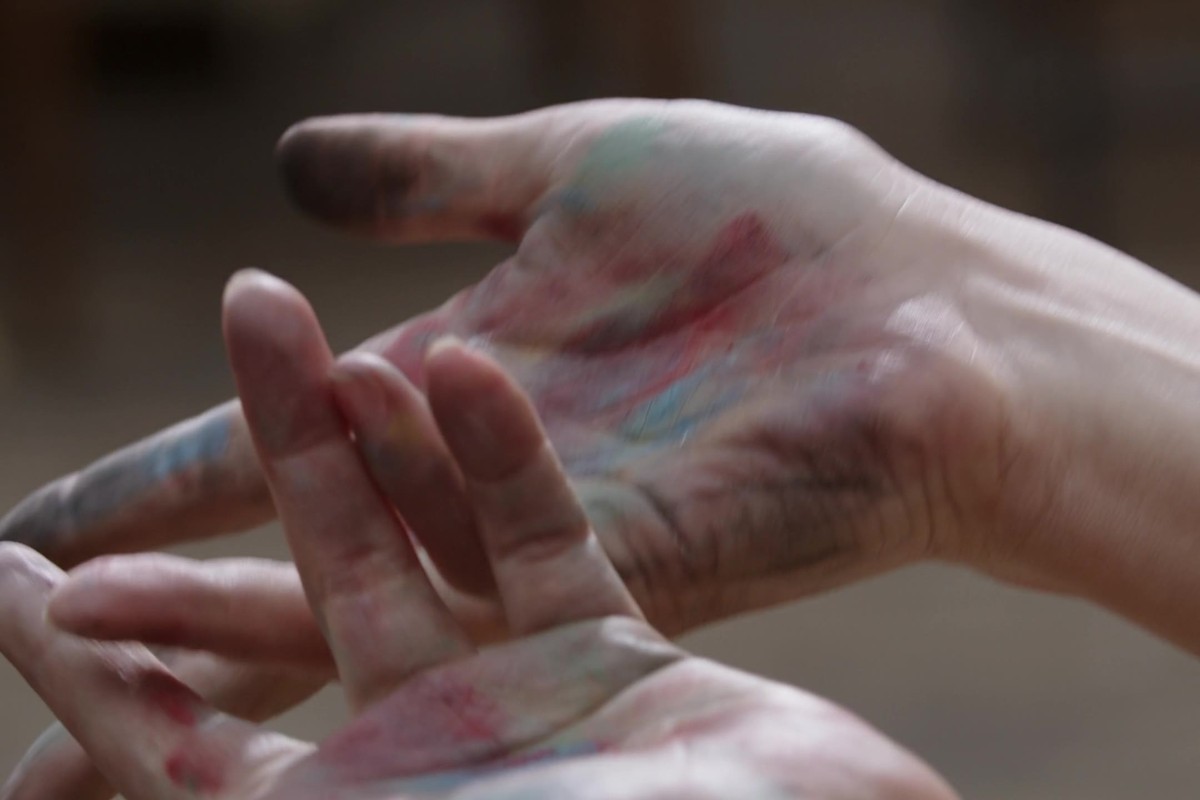
I remember the insistent hum of the refrigerator in my small apartment, a constant low thrum that seemed to vibrate directly in my bones. It was a grey Tuesday, indistinguishable from the dozen other grey Tuesdays that had bled into one another. My hands, usually busy, lay still in my lap, palms upturned, feeling oddly disconnected, like they belonged to someone else. I wasn't doing anything, just existing on the sofa, watching dust motes dance in the thin strip of sunlight cutting through the blinds. There was a peculiar sense of weightlessness and immense heaviness all at once, a paradox that had become my constant companion.
A stack of books sat precariously on the coffee table, a testament to my desperate search for something, anything, to pierce through the fog. Self-help, spirituality, pop psychology – I’d tried them all. Each promised a path, a secret, a way out of the quicksand I felt myself sinking into. But the words often felt distant, intellectual, describing a landscape I couldn't quite map onto my own internal wilderness. They spoke of thoughts and feelings, of changing mindsets, but my struggle felt deeper, more visceral. It was a quiet storm brewing beneath my skin, manifesting as constant tension in my shoulders, a knot in my stomach that never quite eased, and a jumpiness that made unexpected sounds send a jolt through my entire system.
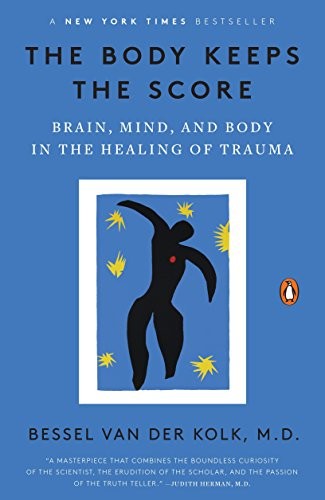
That afternoon, I picked up "The Body Keeps the Score" again. I’d started it weeks prior, setting it aside because it felt too dense, too academic, too much work when I already felt so depleted. But something urged me back. Maybe it was the sheer exhaustion of trying to think my way out of something that felt entirely beyond thought. I craved a framework that acknowledged the unspoken, the unseen architecture of my discomfort.
The Idea That Stayed With Me
The core revelation of "The Body Keeps the Score" wasn't just an idea; it felt like a translation of my lived experience into language I could finally understand. Before reading it, my understanding of trauma was largely confined to mental scars – memories, thoughts, emotional reactions. I thought healing meant processing narratives, reframing thoughts, perhaps talking through events. But Dr. van der Kolk dismantled that neat, cognitive model entirely, illustrating with stark clarity that trauma isn't just "in your head." It's in your entire biological operating system.
He explained how overwhelming experiences, especially those that threaten survival or safety, don't just register as memories; they fundamentally alter the brain's architecture. The alarm system – the amygdala – becomes hyperactive, constantly scanning for danger even when none exists. The prefrontal cortex, responsible for executive functions like planning, reasoning, and emotional regulation, can go offline, making it incredibly difficult to think clearly or calm down when triggered. Even deeper, the vagal nerve, which controls our rest-and-digest versus fight-or-flight responses, can get stuck in patterns of either constant hyperarousal (anxiety, panic, rage) or hypoarousal (numbness, dissociation, depression).
What truly resonated was the concept that the body itself becomes a repository of traumatic memory. These aren't conscious, narrative memories accessible through traditional talk therapy. Instead, they manifest as sensations, impulses, physical pain, chronic tension, digestive issues, and a pervasive sense of unease or restlessness. The body, in its innate attempt to protect us during a threat, often gets stuck in those defensive postures long after the danger has passed. We might feel a sudden urge to flee, or an overwhelming sense of collapse, or a freezing sensation, without any conscious understanding of *why*. These are the body's somatic memories, playing out the unaddressed events, trying to complete actions that were interrupted during the original traumatic experience. The book made me understand that these reactions aren't character flaws or signs of weakness; they are intelligent, albeit outdated, survival responses wired into our physiology. It's not about willpower; it's about the deep, biological imprints of past experiences demanding to be recognized and integrated. The healing, then, couldn't just be a top-down, cognitive process; it had to involve the body, moving through and releasing these trapped energies and patterns.
The Jolt in the Supermarket Aisle
Before this book, my constant companion was a quiet, insidious buzz of anxiety, occasionally erupting into full-blown panic. I’d learned to intellectualize it, label it, even anticipate it, but I never truly understood its primal origins. One afternoon, weeks after I’d picked up the book for the second time, I found myself in the canned goods aisle of the supermarket. A fluorescent light flickered overhead, a subtle, almost imperceptible stutter in the hum of the store, but it was enough.
Suddenly, without warning, a jolt went through me. Not a thought, not an emotion first, but a raw, physical shockwave. My breath hitched, my heart hammered against my ribs, and my vision seemed to narrow, as if I was looking through a tunnel. My hands started to tingle, and there was an overwhelming urge to just *run*. It was the same feeling I'd had countless times before – intense, disorienting, and utterly terrifying – but this time, something was different. Instead of immediately collapsing into self-criticism or frantically trying to "calm down" by sheer force of will, I remembered what I’d read.
"This isn't *me* failing," I thought, almost whispered. "This is my nervous system." The book had talked about how sudden, unexpected stimuli, even seemingly innocuous ones like a flickering light or a particular sound, can bypass the conscious mind entirely and trigger the ancient survival responses stored in the limbic system. My body was reacting as if a saber-toothed tiger had just appeared between the peas and the diced tomatoes. The sheer, physical urgency of the sensation, the feeling of wanting to bolt, was my body trying to complete an action of self-preservation that it had perhaps never been allowed to fully execute in a past moment of fear.
Instead of fighting the sensation, I leaned against my shopping cart, just for a moment, and tried to *feel* it. The tingling in my hands, the tightness in my chest. I didn't try to stop it; I just observed it, almost as if I were a curious bystander to my own body's urgent drama. The book had emphasized the importance of befriending these sensations, of not judging them, but letting them move through. It wasn't immediate magic; the feeling was still intense. But in that small, conscious act of not resisting, of recognizing it as a physiological response rather than a personal failing, a tiny crack of space opened up. The urgency, while still present, didn't consume me entirely. I wasn't lost in the terror; I was just observing the *experience* of terror in my body. It was the first time I felt like I had a compass, however faint, in the middle of a storm I used to think was just a defect in my own being. This wasn't about "fixing" myself; it was about understanding the language my body spoke, even when it screamed.
What I'd Tell Someone Starting This Book
- Don't feel pressured to read it cover-to-cover like a novel. Dip in and out, focus on chapters that resonate, and let some of the more scientific parts just wash over you if they feel overwhelming. It's a dense book, and sometimes just a paragraph or a single sentence can be enough to chew on for days.
- Pay attention to how your own body responds as you read. Do certain passages make your shoulders tense? Does your breath catch? These aren't just intellectual insights; they're invitations to connect with your own somatic experience. Your body might be trying to tell you something.
- Be prepared for it to stir things up. Understanding how trauma lives in the body can be incredibly validating, but it can also bring up old, unresolved sensations or emotions. Have a gentle practice ready for yourself afterwards – a walk, a warm bath, listening to calming music – whatever helps you ground.
- This book is a map, not a cure. It provides profound understanding and a framework for healing, but it’s likely not a substitute for professional support if you're dealing with deep-seated trauma. See it as a powerful companion on a journey, guiding you to new perspectives.
- Consider exploring practices that explicitly involve the body alongside your reading, like gentle yoga, somatic experiencing exercises, or even just mindful movement. The insights from the book become much more vivid when you integrate them with direct bodily awareness.