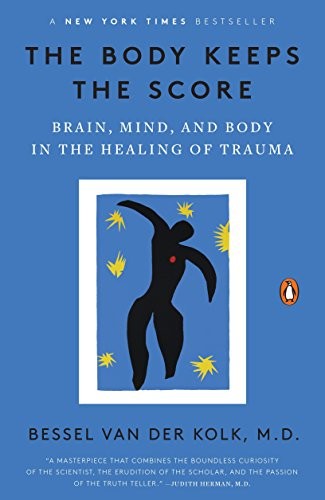
The rain outside was a relentless, grey curtain, drumming a slow, steady rhythm against my windowpane. I remember the weight of the book in my hands, the almost clinical smoothness of the glossy cover, the faint scent of new paper mixed with something older, dustier, from the shelf it had sat on for weeks. It wasn't a comfort read, not something you pick up lightly on a lazy afternoon. My fingers traced the stark title, and I felt a familiar knot tighten in my stomach, a low hum of anxiety that had become a constant companion.
I was huddled on a worn armchair, a mug of lukewarm tea long forgotten beside me. The room felt heavy, mirroring the stillness inside me. For months, I’d been living in a kind of suspended animation, going through the motions, but feeling profoundly disconnected from myself, from the world around me. My body felt like a foreign country, a place I inhabited but didn't truly understand, constantly braced for something, though I couldn't articulate what. My breath often caught, shallow and quick, even when there was no immediate threat. It was a period defined by a pervasive sense of unease, a constant whisper of "something is wrong," without a clear source.
This particular afternoon, the weight of that disconnection felt unbearable. I’d picked up the book more out of a desperate, quiet hope than any real conviction it would help. It was heavy, physically and metaphorically. The pages crackled as I turned them, a small, sharp sound in the quiet room. I wasn't looking for answers as much as a language, a way to name the nameless dread that clung to my skin like the damp air outside.
The Idea That Stayed With Me
The core idea that profoundly shifted how I viewed my own internal landscape is that trauma is not merely a psychological event stored in our memories as a narrative. Instead, it’s fundamentally a physiological imprint, a disruption of our internal regulatory systems that continues to play out in our bodies long after the original event has passed. Van der Kolk explains that when we experience overwhelming stress or threat, our brain’s alarm system — the amygdala — overrides the prefrontal cortex, the part responsible for logic, reason, and coherent storytelling. We go into fight, flight, or freeze mode, and if we can’t effectively respond, that energy, that physiological alarm, gets stuck.
This isn't just about vivid flashbacks or nightmares; it's about how the body continues to react as if the threat is still present, even in safe environments. It manifests as chronic muscle tension, digestive issues, sleep disturbances, heightened startle responses, or a pervasive sense of numbness and dissociation. Our bodies, in a desperate attempt to protect us, learn to stay hyper-vigilant or, conversely, shut down entirely. We might lose touch with our emotions, our physical sensations, or even our sense of self, because those internal experiences become associated with danger. Healing, then, isn't just about understanding what happened, but about helping the body learn that it is safe *now*, restoring its capacity for self-regulation through movement, touch, breath, and interoception—the ability to sense what’s happening inside. It’s about creating new, positive physical experiences that counteract the old, overwhelming ones, gradually rewiring the brain’s alarm system and allowing the body to finally release its long-held grip. It’s a slow, often non-linear process of befriending one’s own nervous system.
My Unsteady Steps Toward Grounding
I remember a particular evening, not long after I started reading the book. I was sitting at my kitchen table, trying to eat dinner, but my jaw felt clenched, my shoulders hunched so high they almost touched my ears. My mind was racing through a mundane work task, overthinking every possible negative outcome, while simultaneously feeling utterly exhausted. It was a familiar state: wired and tired. I tried to take a deep breath, but it felt shallow, stuck in my chest. My hands, resting on the table, felt foreign, almost numb. I watched them, as if they belonged to someone else.
The voice in my head, the constant critic, was louder than usual, berating me for not being able to relax, for feeling "off" all the time. But this time, something was different. A phrase from the book echoed: "Trauma is not just a story about the past; it is the current imprint of that pain, fear, and helplessness on the body and mind." Instead of fighting the feeling, trying to intellectualize it away, I paused. I placed my hands flat on the cool surface of the table, really feeling the smooth laminate beneath my palms. I pressed down, feeling the subtle resistance, the contact. Then I noticed the dull ache in my lower back, the tightness behind my eyes. These weren't new sensations, but this time, instead of dismissing them as "just stress" or "being tired," I tried to simply acknowledge them. *There is tightness in my jaw. My shoulders are up. My hands feel numb.*
It wasn't a sudden revelation or a dramatic cure. It was a tiny, almost imperceptible shift. By simply observing, without judgment, the physical sensations that had become so ingrained, I was doing something I hadn't realized I needed to do: I was giving them space. I was beginning to recognize that the anxiety wasn't just a thought loop; it was a physical state. That clenching, that shallow breath, that numbness – my body was communicating something, an echo of past overwhelm, an alarm bell ringing in a quiet room. It wasn’t about fixing it, but about the profound recognition that my physical self held a story I hadn’t known how to read, and that perhaps, by learning its language, I could begin to find a way back to myself.
What I'd Tell Someone Starting This Book
- This book is dense and emotionally heavy. Read it in small chunks, give yourself plenty of breaks, and don't feel like you need to absorb it all at once. It’s not a race.
- Be prepared to feel some discomfort or even distress as you read. The content can be triggering, as it delves deeply into various forms of trauma and their impact. Prioritize your well-being.
- Don't approach it expecting a prescriptive self-help guide with immediate action steps. It’s more of an academic exploration and a call for a paradigm shift in how we understand and treat trauma. Its value is in the profound understanding it offers.
- Pay close attention to the personal stories and case studies throughout the book. They humanize the complex scientific concepts and make the theories much more relatable and impactful than the research summaries alone.
- If possible, read this book alongside working with a therapist or other mental health professional who is trauma-informed. Discussing the concepts with someone experienced can provide invaluable support and context as you process the information.