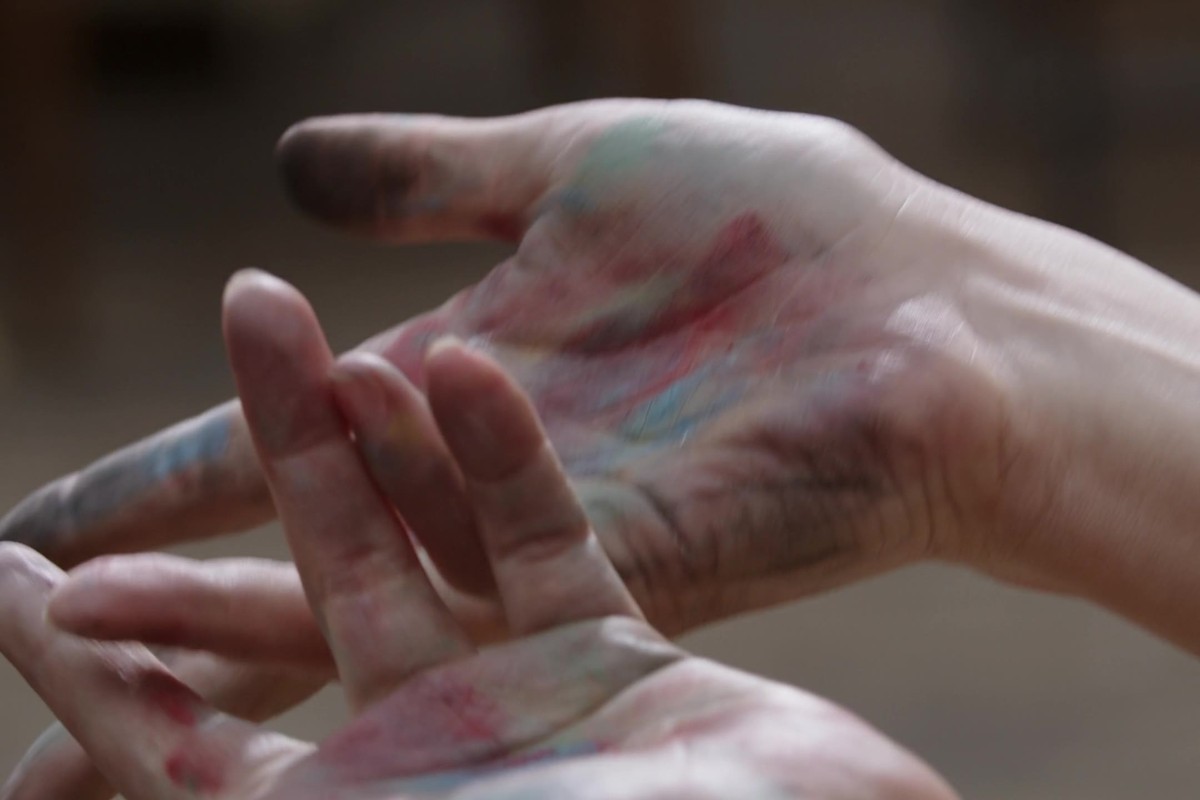
The rain outside was relentless, a drumming against the windowpane that felt both comforting and oppressive. My hands, usually busy with something, anything, lay still in my lap, tracing the frayed edge of a blanket. The air was thick with a damp chill, even though the heating was on low, and the faint scent of old books and something vaguely metallic from the rain clung to everything. I remember the weight of my own shoulders, a constant, low thrum of tension that had become so familiar it felt like part of my skeleton. I wasn't just tired; I was deeply, fundamentally weary in a way that sleep couldn't touch.
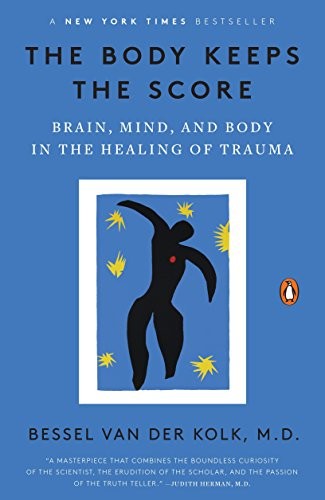
For months, I’d been cycling through therapists, trying to find words for something that felt wordless. Each session ended with me feeling a little more frustrated, a little more convinced that whatever was "wrong" with me wasn't reachable through conversation. It was a buzzing beneath my skin, a phantom ache in my chest, a sudden clenching in my jaw that would come out of nowhere. I’d try to explain it, but the explanations felt flimsy, like trying to catch smoke. I’d pick up books, hoping for a magic phrase, a secret handshake into understanding, and usually, they'd just gather dust. But this one... this one felt different, even just holding it.
The Idea That Stayed With Me
Before I opened *The Body Keeps the Score*, I thought of trauma as a bad memory, something that happened *to* you, that you then needed to "process" or "get over" through talking and cognitive reframing. Bessel van der Kolk's work shattered that narrow understanding completely. The core idea isn't just that past experiences affect your present, but that trauma fundamentally rewires your brain and nervous system, literally changing how you perceive the world and react to it, often without your conscious awareness. It’s not about remembering what happened; it’s about what your body *remembers* and how it continues to react as if the threat is still present, even decades later.
He explains that when we face overwhelming threat, our primitive brain kicks in, prioritizing survival over logic or language. It shifts resources away from the prefrontal cortex (responsible for rational thought, planning, and self-regulation) and into the amygdala and brainstem (the alarm system and basic survival functions). This means that during trauma, and in its aftermath, you’re often operating from a place of instinctual response – fight, flight, freeze, or fawn – rather than conscious choice. Your body holds the score, quite literally, as physiological imprints: a chronically elevated heart rate, muscle tension, digestive issues, hypervigilance, an inability to relax, or even a sense of numbness and dissociation.
What truly resonated was the concept that these physical sensations and automatic reactions aren't just symptoms; they are the trauma manifesting itself. It’s not simply a psychological problem that needs psychological solutions. It's a whole-system disruption. Healing, then, isn't just about constructing a coherent narrative of what happened; it's about helping the body feel safe again. It’s about restoring the connection between mind and body, allowing the nervous system to regulate itself, and integrating those fragmented experiences so that the past can stay in the past, rather than continually intruding on the present through bodily sensations and automatic responses. This means therapies that engage the body — like yoga, EMDR, neurofeedback, or even just conscious breathing and movement — become crucial, not just adjuncts to talk therapy. It reframes the entire healing process from an intellectual exercise to a deeply embodied one, recognizing that the body has its own language of distress and healing, often independent of words.
My Jaw and the Echo of Old Fears
I used to wake up with my jaw aching, sometimes so badly I couldn't open my mouth properly. It was a constant companion, this dull, grinding pain, and I’d dismiss it as stress, a bad pillow, or just "one of those things." I’d try to relax my face, but the tension was so ingrained, it felt like bone. After reading about the body's physical responses to trauma, especially the way chronic stress and fear can manifest in muscle tension, I started paying attention differently. It wasn't just "stress." It was a signal.
I began noticing *when* the jaw clenching was worst. It wasn't random. It would often spike during moments of perceived vulnerability, or when I felt unheard, or when I was navigating a situation where I felt a lack of control, no matter how small. It wasn't the explicit memory of a specific past event, but a deep, somatic echo of a time when I *had* been vulnerable, unheard, and profoundly out of control. My body, particularly my jaw, was bracing itself for an anticipated impact, preparing to "hold it in" or "brace against it," even when no physical threat was present. It was an unconscious, physiological "fight" response that had become stuck on a loop.
Instead of just trying to force my jaw to relax, I started to acknowledge it. I’d place my hand on my cheek, feeling the hardness of the muscle, and just breathe into it. I started gentle jaw stretches, and sought out a therapist who specialized in somatic work. We didn't talk endlessly about *why* my jaw clenched in specific situations from my past, but rather, we focused on helping my nervous system downregulate in the present. We explored how those old feelings of powerlessness had imprinted on my musculature, and through conscious movement and breath, slowly, gently, started to release that stored tension. It wasn't a quick fix; it was a slow, sometimes frustrating process of reconnecting with a part of my body I had mostly ignored or fought against. The clenching didn't disappear overnight, but understanding its roots, seeing it as my body's language rather than a defect, allowed me to approach it with curiosity and compassion instead of frustration. It allowed me to begin to unlearn that ingrained, defensive posture.
What I'd Tell Someone Starting This Book
- Don't feel pressured to read it cover-to-cover if it feels too intense. Dip in and out, read the chapters that speak to you most directly, and give yourself breaks.
- Pay close attention to how you feel *in your body* as you read. If you notice tension, discomfort, or a desire to shut down, that's information. Acknowledge it gently.
- This isn't just an academic text. It's an invitation to understand yourself and others with profound new empathy. Let that empathy extend to your own physical reactions.
- Don't expect instant answers or a magic cure. It's a dense book that offers a framework for understanding, not a step-by-step healing guide. Healing is a process, not a destination.
- Consider pairing your reading with some form of embodied practice, whether it’s gentle yoga, a walking meditation, or simply conscious breathing. Your body needs to be part of the conversation.