I remember sitting on my worn armchair, the afternoon light thin and watery through the window, trying to focus on a book. My shoulders felt like two stone weights, pulled up to my ears, and there was a knot in my stomach that had been there for days. I hadn’t had a particularly stressful day; in fact, it had been remarkably calm. Yet, this familiar, low-grade physical unease persisted. It was the kind of tension you learn to live with, to ignore, until it becomes your baseline. My mind was trying to sort through practicalities, future plans, things that felt controllable. But my body, without a single conscious thought from me, was humming a different tune, a quiet vibration of alarm. I just wanted it to quiet down, to let me be.
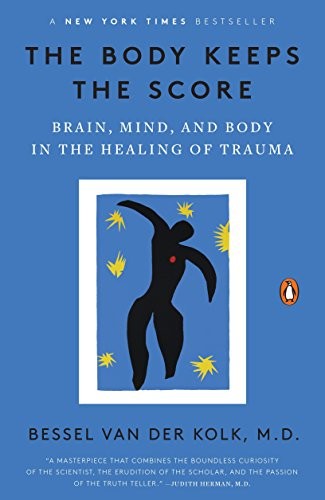
What The Body Keeps the Score Actually Says About Somatic Safety
Bessel van der Kolk's seminal work, *The Body Keeps the Score*, fundamentally shifts our understanding of trauma from a purely psychological phenomenon to one deeply embedded in the physical architecture of the body. He argues that traumatic experiences aren't just memories stored in the brain; they are lived experiences that continue to manifest in our physiological responses, our nervous systems, and even our musculature. When we experience overwhelming stress or trauma, our primitive brain, designed for survival, takes over. It mobilizes us for fight, flight, or freeze. If these responses are incomplete or thwarted, the residual energy and survival patterns get "stuck" in the body. The quote, "As long as you are able to feel your body, you can feel safe," speaks to a core tenet of somatic healing: the ability to notice and inhabit one's physical sensations can be a powerful pathway back to safety and regulation. Van der Kolk emphasizes that simply talking about trauma often isn't enough because the body's responses operate below the level of conscious thought and language. True healing requires engaging the body itself—through movement, breathwork, touch, and mindful awareness—to complete the thwarted actions, discharge stored energy, and reprogram the nervous system to recognize safety in the present moment. He details how different therapeutic modalities, from yoga and EMDR to neurofeedback, work by helping individuals reconnect with their physical selves and gradually integrate fragmented sensory experiences, moving from a state of perpetual alarm to one of grounded presence.
The Quiet Hum of Unresolved Things
Reading this book felt less like reading and more like being seen. The quote about feeling safe by feeling your body made me stop cold. I had spent so much of my life trying to *think* my way out of discomfort, to intellectualize away every ache or tension. But the book suggested that my body wasn't an inconvenient container for my mind; it was a primary source of information, a memory keeper. I started paying attention to that jaw clench, not as a problem to be solved, but as a message. A very quiet, persistent message. Instead of ignoring it, I'd gently bring my awareness to it, sometimes even putting a hand to my jaw. It didn't make the feeling vanish immediately, but it changed its quality. It moved from a frantic, unknown alarm to a recognizable, if still uncomfortable, sensation. It was like acknowledging an old friend, even if that friend was carrying a heavy suitcase. That small act of noticing, without judgment, felt like a radical act of self-acceptance. It was a slow, uneven process, but each tiny moment of simply *feeling* my body, without demanding it change, felt like a small anchor dropping into the present.
Key Takeaways
- Trauma and stress are stored physically, manifesting as chronic tension, pain, or dysregulation in the body.
- Our bodies hold memories and experiences that our conscious minds may have forgotten or suppressed.
- The ability to consciously feel and attend to physical sensations is a crucial step towards healing and self-regulation.
- Healing often involves engaging the body through practices like mindful movement, breathwork, and somatic therapies.
- True safety isn't just an external condition; it's an internal state cultivated by connecting with and regulating one's own physiology.
- Understanding the body's role in trauma helps to destigmatize symptoms and foster compassion for oneself.
Should You Read The Body Keeps the Score?
This isn't a light read. *The Body Keeps the Score* is dense, scientific, and at times, intensely moving. It's for anyone who has experienced trauma (directly or indirectly), or works with people who have. It's also for those who find themselves caught in cycles of anxiety, depression, or unexplained physical symptoms, and suspect there might be more to their experience than talk therapy alone can address. If you're looking for quick fixes or surface-level affirmations, this isn't it. But if you're ready for a deep, challenging, and profoundly illuminating dive into how our minds and bodies intertwine in the healing process, and if you're open to understanding the science behind why some conventional approaches to healing fall short, then yes, absolutely pick this up. It changed how I understood myself and the world around me.