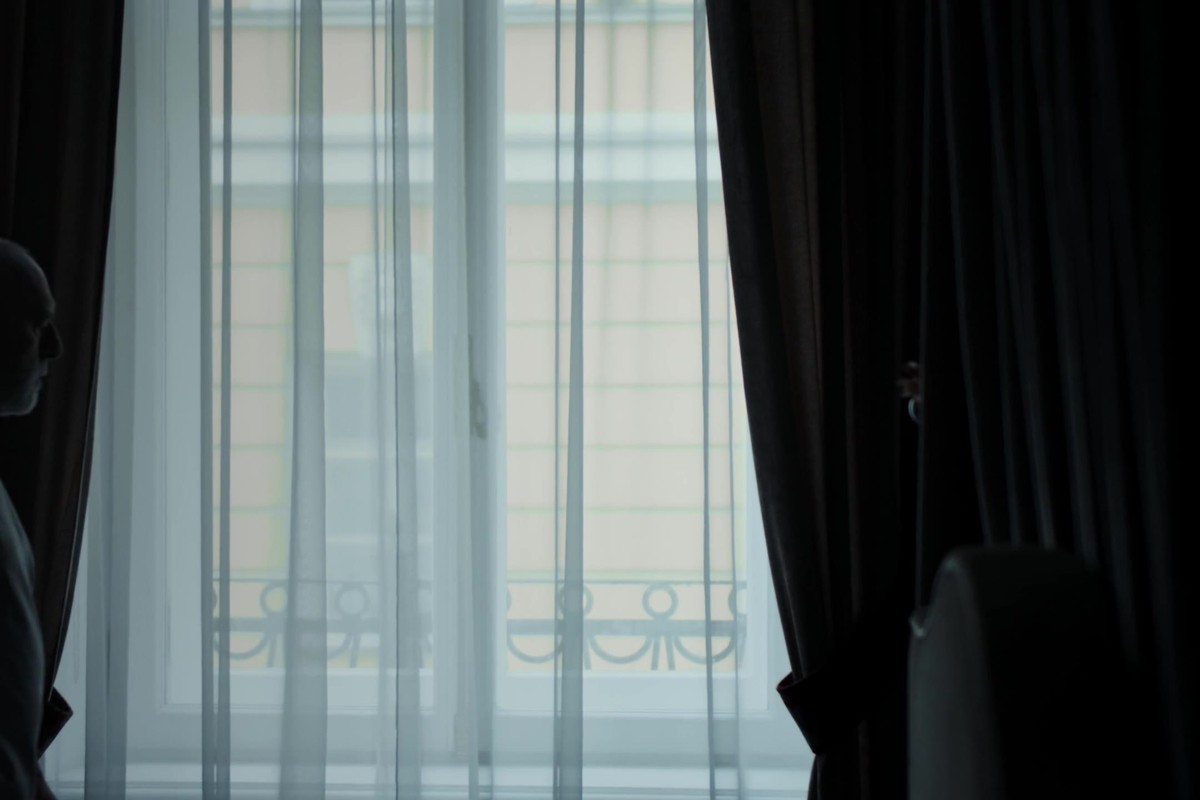
The chill in the air of my small apartment was a constant companion that winter. I remember it clearly: the weak sun struggling to break through a perpetually overcast sky, casting a dull, pewter light across the worn wooden floorboards. My hands often felt cold, even wrapped around a warm mug of herbal tea, a physical manifestation, perhaps, of an internal numbness that had settled deep within me. My gaze would often drift to the window, tracing the intricate patterns of condensation on the glass, each tiny droplet holding a reflection of the grey world outside, mirroring the muted landscape of my inner life.
Days bled into one another, marked less by events and more by a persistent, low-level hum of anxiety that never quite dissipated. My phone lay face down on the scarred coffee table, a silent testament to a withdrawal from the relentless demands of the world. It felt like I was perpetually adrift, tethered only by the insistent, often critical, voice in my head that narrated every perceived failing, every missed opportunity, every lingering regret. The quiet of the apartment, far from being peaceful, felt heavy, amplifying the relentless chatter of my own mind until it became an almost unbearable cacophony. I was exhausted, not from physical exertion, but from the constant wrestling match with my own thoughts, a battle I seemed to be losing.
It was during one such afternoon, wrapped in a blanket on my sofa, the scent of stale coffee mixing with the faint sweetness of a dying houseplant, that I picked up "The Untethered Soul." It wasn't a recommendation from a friend, or a trending title I’d seen online. I honestly can’t recall how it landed in my hands, only that its unassuming cover and simple title offered a whisper of an alternative to the relentless internal monologue that had become my unwelcome constant companion. I didn't open it with hope, not exactly. More with a desperate curiosity, a faint, almost imperceptible flicker of a desire for something, anything, to shift.
The Idea That Stayed With Me
The core revelation of "The Untethered Soul" wasn't a complex philosophical treatise; it was something far simpler, yet utterly profound. Michael A. Singer presents the idea that you, the true you, are not the voice in your head. You are not your emotions, not your thoughts, not the constant stream of judgments or anxieties your mind weaves. Instead, you are the conscious awareness, the silent observer, the space in which all of those things arise and pass. It’s like distinguishing between the sky and the clouds that float through it. The sky is always there, vast and unchanging; the clouds are temporary formations. Our mind, our ego, our personality – these are the clouds. Our true self, our consciousness, is the sky.
This concept shifted everything. For so long, I had identified completely with my internal monologue. When the voice said "You're not good enough," I *wasn't* good enough. When it whispered worries about the future, I *was* worried. My entire sense of self was intricately bound up with the contents of my mind, leading to a constant state of internal reactivity. The book gently, but firmly, invites you to step back from this identification. It asks you to notice that there's an 'I' that is *hearing* the thoughts, an 'I' that is *feeling* the emotions. This 'I' is distinct from the thought or the feeling itself.
Singer suggests that this incessant internal chatter, this "inner roommate" as he calls it, is largely a mechanism the ego creates to feel safe, to control. But in its attempt to control, it often creates more suffering. The path to freedom, then, is not to fight the roommate, but to simply refuse to engage. To observe it with a detached curiosity, like watching leaves float down a river. When a thought arises, you don't jump in and wrestle with it or analyze it. You simply *witness* its presence, acknowledging it without judgment, and allowing it to pass. The power lies in realizing that you have a choice: you can either get swept away by the river of your thoughts, or you can stand on the bank, observing its flow. This profound distinction cultivates an inner sanctuary, a place of peace that remains untouched by external chaos or the internal machinations of the mind. It’s about recognizing that peace isn't something to be found outside; it's the inherent nature of the awareness that is always present, beneath the surface of all the noise.
My Unfurling Moment
There was a time, not long after first engaging with Singer’s ideas, when I found myself caught in a familiar spiral of self-reproach. I had made a rather clumsy mistake at work – a forgotten email attachment. Simple enough to fix, but in my mind, it spiraled into an indictment of my entire professional competence. The internal voice, sharp and relentless, began its familiar litany: "How could you be so careless? You're always overlooking details. They’re going to notice this, they’re going to question everything." My stomach churned, a knot of dread tightening with each successive thought. My shoulders hunched almost imperceptibly, as if bracing for an invisible blow.
In that moment, feeling the familiar grip of shame and anxiety, something shifted. It wasn't a grand, instantaneous liberation, but more like a tiny crack in a previously impenetrable wall. I felt the physical sensations – the tightness in my chest, the racing pulse – and I heard the harsh monologue, but for the first time, I also *noticed myself* hearing it. It was like I had taken a single, almost imperceptible step back from the direct firing line. Instead of *being* the thought "I am careless," I saw the thought *arise*. I wasn't able to simply dismiss it, not entirely, but I also wasn't completely swallowed by it.
A part of me, the 'observer' Singer spoke of, acknowledged the thought: "Ah, there's the 'you're careless' thought again. There's the feeling of shame." It was like watching a character in a play, rather than being the character itself. The intensity of the emotion didn't vanish, but its all-consuming nature lessened, just a fraction. I took a deep breath, and rather than immediately trying to counter the thought, I simply allowed it to be there, without feeding it more energy. I watched it, not judging the thought itself, or judging myself for having it. It felt like standing on the bank of that river, watching a particularly strong current, but consciously choosing not to jump in. The river still flowed powerfully, but I was no longer being dragged downstream. That small, internal separation was a revelation. It didn’t fix the work mistake, and it didn't instantly make me feel confident, but it granted me a precious sliver of space, a moment of inner freedom I hadn't known was possible. It showed me that even in the midst of intense internal suffering, there is a part of me that remains untouched, an observing consciousness that holds the potential for true peace.
What I'd Tell Someone Starting This Book
If you're picking up "The Untethered Soul," you're likely searching for a different way to experience your inner life, just as I was. Here are a few things that might help you along the way:
- Don't approach it like a textbook or a manual to be mastered. Read it slowly, perhaps just a chapter or a few pages at a time, letting the ideas really sink in. It’s less about intellectual understanding and more about an experiential shift.
- The most critical practice is simply noticing. Don't try to *stop* your thoughts or *force* yourself to be peaceful. That's another form of mental engagement. Instead, aim to merely *observe* the thoughts and emotions as they arise, like watching clouds drift across the sky. The key isn't control, but gentle, persistent awareness.
- Be prepared for your "inner roommate" to resist. The ego doesn't give up its narratives easily. You might find yourself more aware of the sheer volume of mental chatter at first, which can be overwhelming. This is normal; it means you're starting to see what was always there.
- Pay attention to the physical sensations in your body when strong thoughts or emotions emerge. These can be valuable anchors for your awareness, helping you to remain present and connected to the 'you' that is observing.
- This journey is about liberation, not perfection. You will get swept away by your thoughts. You will forget to observe. The practice isn't about never getting lost; it's about gently noticing when you *are* lost and returning your attention to the silent witness. Each return is a step forward.