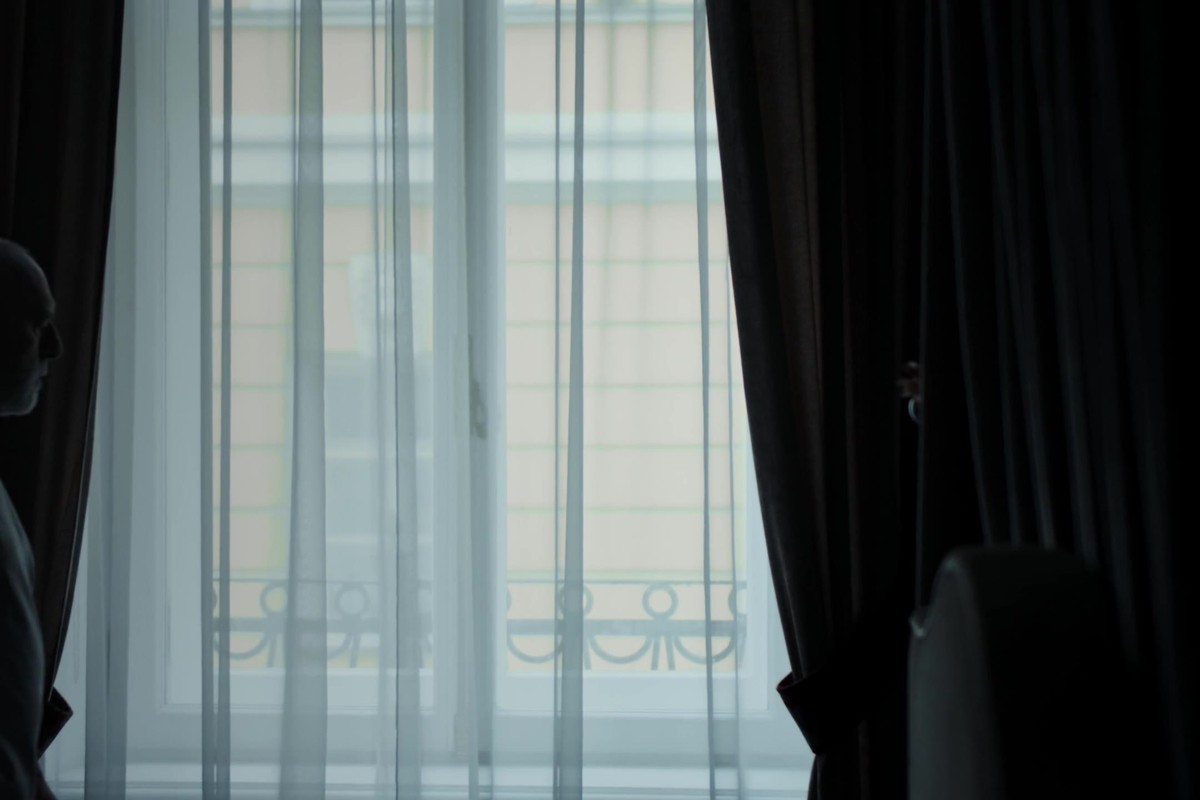
The damp chill of early autumn seeping through the old windowpanes. My fingers, stained faintly with tea, tracing the condensation. The heavy silence of the house, amplifying the buzzing hum within my own head. It was a time when the world outside felt muted, yet my internal landscape was a cacophony. I remember the specific armchair, worn velvet, where I’d retreat, usually with a mug of something warm, but never truly warm myself. Each day seemed to arrive carrying its own invisible weight, pressing down on my chest until breathing felt like a conscious effort, a mechanical act rather than an automatic one.
The bookshelf, an old pine unit crammed with spines of every color, felt like both a refuge and a taunt. So many promises of understanding, of relief, yet I often found myself just staring at the titles, unable to pick one, unable to believe any could truly reach the specific, gnawing anxiety that had taken up residence. My hands would hover, then drop, defeated before I even started. The dust motes dancing in the weak afternoon light felt more active, more alive, than I did. That’s when the familiar blue cover, almost hidden, finally caught my eye.
The Idea That Stayed With Me
The core idea woven throughout The Untethered Soul isn’t necessarily a technique you apply, but rather a profound shift in perspective you cultivate. It’s about recognizing that you, the essential 'you,' are not your thoughts, your emotions, your anxieties, or even your personality. Instead, you are the conscious space *observing* all of those things. Imagine you're sitting on a riverbank. The river is your mind, and everything floating by—leaves, branches, bits of debris—are your thoughts and feelings. Most of us, most of the time, are so caught up in the current, struggling to grab certain things, pushing others away, or drowning in the flow. This book invited me to step back, way back, and simply sit on the bank.
It posits that there’s a part of us, a pure awareness, that remains untouched by the relentless stream of internal chatter and emotional turbulence. This 'Self' is a constant, a quiet witness that simply sees without judgment or involvement. The struggle, then, isn't to stop the river from flowing, or to control what floats by, but to disentangle our sense of self from the contents of the river. It's an invitation to stop identifying with the voice in your head that narrates your life, criticizes your actions, replays past conversations, and worries about the future. That voice, the book suggests, is just one aspect of your experience, not the totality of who you are.
This idea felt incredibly liberating, and initially, quite challenging. My entire life, I had assumed I *was* my thoughts, that my feelings defined my reality. To consider that these were just phenomena passing through a larger, more stable 'me' was a radical concept. It implied that peace wasn't something to be found by fixing every problem or silencing every intrusive thought, but by simply recognizing the inherent spaciousness and calm that already existed beneath all the noise. The goal wasn't to achieve a state of thoughtlessness, but a state of *witnessing* thought, a state of allowing. It was about realizing that the observer isn't affected by what it observes, just as the sky isn't affected by the clouds that pass through it.
My Uninvited Guest
I remember a particular evening, several months after first picking up the book, when this concept truly clicked for me, not as an intellectual understanding, but as a lived experience. I had been working on a complex project for weeks, feeling the familiar tightening in my chest, the constant low thrum of anxiety. The deadline was looming, and despite working long hours, I felt an almost paralyzing fear of not being good enough, of failing. My inner monologue was relentless: *You're going to mess this up. Everyone will see you're not capable. Why did you even take this on?* It was a familiar cycle of self-criticism, and usually, I’d just sink into it, letting it drain my energy and productivity.
That night, it was late. The only light in my study came from the desk lamp, casting long, eerie shadows. My shoulders were hunched, my eyes strained, and I could feel the familiar knot of dread in my stomach. I was scrolling through my work, seeing only flaws, each mistake amplified by the internal voice. Then, for a fleeting moment, a tiny crack appeared in the wall of my self-absorption. I remembered a passage from the book, not even specific words, but the *feeling* of what it was suggesting. I paused, took a breath, and tried something new. Instead of fighting the critical voice, or trying to logically refute it, I just... listened.
I heard it say, *This is terrible. You're a fraud.* And instead of reacting, instead of the immediate cascade of shame and panic, I tried to perceive the voice *as* a voice. An uninvited guest, certainly, a loud one, but a separate entity. I mentally stepped back, as if observing a character in a play, or a cloud drifting across the sky. I could still hear the words, still feel the unpleasant clench in my stomach, but for the first time, it wasn't *me*. It was a sensation, a thought pattern, something happening *within* my experience, but not *being* my essential self. It was like seeing the river flowing, and knowing I was on the bank, not in the current.
The shift wasn't a sudden burst of joy or an immediate disappearance of the anxiety. The physical sensations were still there, the thoughts still cycled. But the *suffering* around them diminished. The sheer identification with them loosened its grip. I wasn’t fighting the voice; I was simply acknowledging its presence without buying into its narrative completely. It was a profound difference. I finished my work that night, not with triumph, but with a quiet sense of detached focus I hadn't known before. The "uninvited guest" was still chatting away, but I was no longer offering it a seat at my internal table, nor was I letting it dictate the menu. I just let it be, and in that simple act of allowing, a space opened up where a tiny bit of peace could finally settle. It wasn't perfect, but it was a beginning.
What I'd Tell Someone Starting This Book
- Don't approach it like a textbook or a set of instructions you need to master. Read it more like a conversation, allowing the ideas to simply wash over you without pressure to "get it" immediately.
- Be prepared for some concepts to feel abstract or even counterintuitive at first. The journey it describes is more about unlearning ingrained habits of mind than acquiring new ones.
- Notice the subtle shifts. You might not have a sudden epiphany, but perhaps you'll find yourself observing a stressful thought for a second before reacting to it, and that tiny pause is the entire point.
- Don't try to stop thinking or feeling. The aim isn't to become a robot devoid of emotion, but to experience these aspects of yourself without letting them dictate your core being.
- Give yourself permission to reread sections. Sometimes a sentence that made no sense on a first pass will resonate deeply after you've allowed other ideas to percolate.