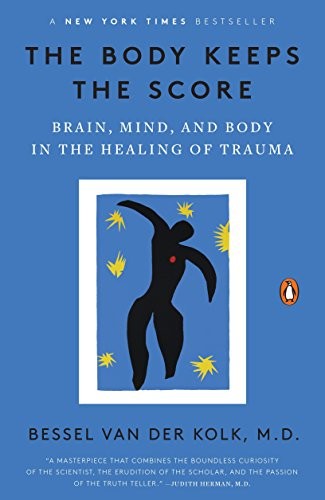
The worn armchair by the window was my sanctuary, or maybe my cage. Dust motes danced in the pale afternoon light that slanted through the old panes, illuminating the quiet chaos of my living room. I remember the weight of the book in my hands, heavy and almost imposing, its spine uncracked, still holding the promise of something I wasn't sure I was ready for. Outside, the rain had just stopped, leaving behind that damp, earthy smell that always reminds me of something both fresh and decaying. My own body felt just like that — a heavy, damp thing, full of an ache I couldn't quite name, something rooted deeper than muscle soreness or fatigue.
I’d been adrift for what felt like years, a phantom limb walking through my own existence. There was a constant hum of anxiety beneath everything, a low-grade current that kept me perpetually on edge, even when nothing was overtly wrong. Simple tasks felt monumental. Connecting with people felt like a performance I was too tired to give. My hands often felt cold, even on warm days, and my breath seemed to catch in my throat more often than not. I was present, physically, but the 'me' inside felt miles away, watching a grainy film of my own life.
Friends had suggested therapy, mindfulness, exercise – all the things people suggest when they see you fading. I tried some of it, half-heartedly, but the answers always felt like they were missing a piece, like trying to fix a complex machine by only looking at its surface. That's when someone mentioned *The Body Keeps the Score*, almost as an afterthought. It sat on my bedside table for weeks, a silent accusation, before that rainy afternoon finally pushed me to pick it up. I wasn't looking for a cure, not really. Just a flicker of understanding, a reason for the persistent feeling of being fundamentally out of sync.
The Idea That Stayed With Me
Bessel van der Kolk’s work isn’t about just *what happened* to you, but *what happens inside you* because of what happened. Before I read it, I viewed trauma primarily as a psychological wound – something in my mind, a collection of bad memories or negative thought patterns. This book completely reframed that for me. It articulated, with such profound clarity, that trauma isn't just a story we tell ourselves; it's a physiological event, a deep imprint on the nervous system, a literal rewiring of the brain. It showed me that when something overwhelming happens, especially if we can't fight or flee, our bodies go into a survival mode that doesn't just switch off when the danger passes. Instead, it gets stuck.
My understanding shifted from 'I *think* I'm anxious' to 'my *nervous system* is stuck in an anxious loop.' The constant vigilance, the sudden surges of adrenaline, the feeling of being frozen, the emotional numbness – these weren't personal failings. They were echoes of a past threat, still reverberating in my biology. The book explains how the parts of the brain responsible for rational thought can go offline, while the more primitive, survival-oriented parts take over. It’s why sometimes, even when you know logically you’re safe, your body reacts as if it’s still in danger. It explains why some memories are fragmented, why feeling fully present can be so incredibly hard, almost painful. We’re literally disconnected from our bodies, because to stay connected might mean reliving the unbearable.
The profound implication, for me, was that healing wasn't going to be purely a top-down process of talking and thinking. It had to be bottom-up as well. It meant befriending the parts of my body that had been forced to carry the burden, to create safety where there had been none, to gently coax the nervous system back into regulation. It meant understanding that the body, in its attempt to protect us, often traps the very energy and sensation of the trauma. The book argues that until we can safely feel and integrate these sensations, until we can move from a state of hyperarousal or hypoarousal back into a 'window of tolerance,' true healing remains elusive. This wasn’t just theory; it felt like he was describing the persistent, nameless unease I had lived with for so long, finally giving it a scientific, compassionate explanation.
The Shaking in My Hands
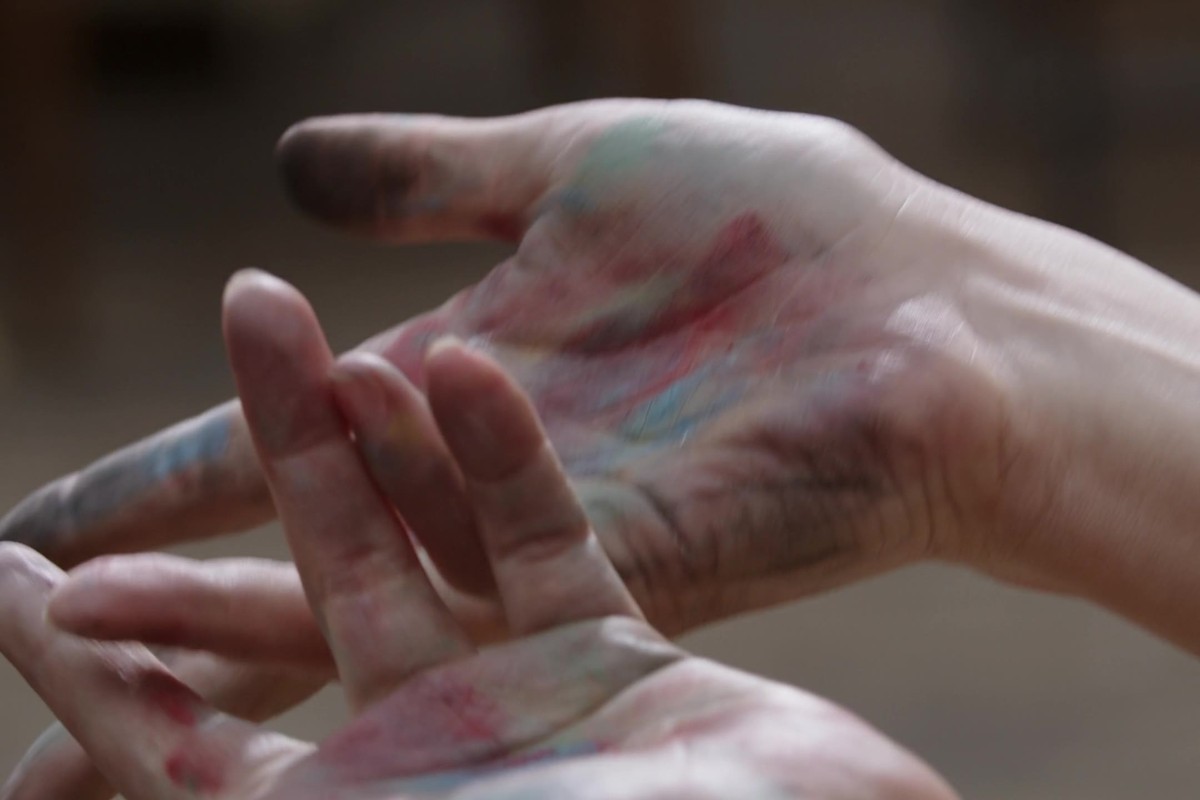
I used to get these inexplicable tremors in my hands. Not always visible to others, but I could feel them, a faint internal vibrating, especially when I was trying to concentrate or when I felt put on the spot. It would happen during mundane things – signing a form, trying to thread a needle, or holding a cup of tea. It felt like my body was trying to shed something, but I never knew what. Before reading the book, I’d just dismiss it as nerves, another flaw, another sign of my general frazzled state. I'd clench my fists, try to steady myself, willing the sensation to go away.
One evening, after several chapters about the freeze response and the discharge of stored energy, I was sitting alone, trying to write a difficult email. My hands started their familiar tremor. Instead of fighting it, for the first time, I just… noticed it. I put my hands flat on my lap, palms down, and just felt the vibration. It wasn't violent, but it was insistent. I imagined it like a gentle shiver, a release. I didn’t judge it. I didn’t try to make it stop. I just allowed it to be there. And then, a strange thing happened. Alongside the tremor, a wave of warmth spread through my arms, and a deep, unexpected sigh escaped me. It wasn’t a dramatic emotional breakdown, but a subtle, internal shift. It was as if a tiny, locked valve had just opened, letting a little bit of old pressure out.
In that moment, I understood. The shaking wasn't a sign of weakness; it was my body's innate way of trying to complete a cycle that had been interrupted. It was my system attempting to discharge the fight-or-flight energy that had never found an outlet. It wasn't something to suppress or be ashamed of, but something to acknowledge, to welcome, even. This small act of allowing, of not fighting my own internal experience, felt revolutionary. It didn’t fix everything, of course. The tremors didn't disappear forever. But the quality of my relationship with them changed. They became less frightening, less alien. They became messengers, gentle reminders to check in, to breathe, to allow my body its own wisdom. It was a moment of true self-compassion, born from understanding what my body was truly trying to do.
What I'd Tell Someone Starting This Book
- Don't feel pressured to read it cover-to-cover quickly; it's dense with scientific detail and powerful insights that need time to sink in.
- Be gentle with yourself; some of the content can be deeply resonant and potentially triggering, so ensure you have a safe space and support system when you read.
- Pay particular attention to the chapters on various healing modalities beyond talk therapy; they offer practical pathways for reconnecting with your body.
- Consider reading it alongside gentle somatic practices, like mindful movement or breathwork; the integration of mind and body is truly where the shifts begin.
- Remember, it’s a framework for understanding, not a magic cure; its power lies in providing language and context for your own internal experiences, which is the first step toward lasting change.