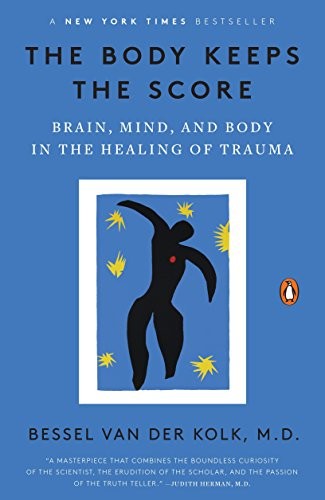
The rain outside my window started as a gentle patter, then turned into a drumming against the glass, a persistent rhythm that mirrored the thrumming behind my own eyes. I was curled in the old, floral armchair, the one with the slight dip in the cushion where I always sat. My fingers traced the worn spine of the book resting on my lap, its pages still smelling faintly of old paper and the quiet dust of bookstores. For weeks, it had been my constant companion, a heavy anchor in a sea of confusion. Some days, I’d just hold it, not even opening it, the sheer weight a small comfort, a promise of understanding.
The world outside felt muted, grey, a reflection of the landscape inside me. My body felt… wrong. Not sick, not injured, but perpetually on edge, a low hum of anxiety that sometimes crescendoed into an internal clamor. My shoulders lived somewhere up around my ears, a permanent shrug of tension. My breath felt shallow, caught somewhere in my throat, never quite reaching the deepest parts of my lungs. Mornings were the hardest, the awakening a jolt, a sudden readiness for something unnamed and unwelcome. This book, though, promised to name the unnameable, to give shape to the formless dread that had taken up residence in my nervous system.
I remember one afternoon, the sun finally breaking through the clouds, casting a weak, watery light across the room. I had been reading a particularly dense chapter, the words blurring slightly as my own tension mounted. My stomach was a knot, my jaw clenched so tight I felt a dull ache behind my temples. I set the book down, hands trembling, and just sat there, listening to the rain fade and the distant chirp of a bird. It was in that quiet moment, feeling the very real, physical sensations in my body, that I started to grasp what the pages were trying to tell me. It wasn't just abstract theory; it was my lived experience staring back at me, finally articulated.
The Idea That Stayed With Me
The central, earth-shattering idea woven through "The Body Keeps the Score" is that trauma isn't merely a psychological event or a bad memory. It's a physiological imprint, a deep encoding in our cells, our nervous system, our physical being. It's not about *what* we remember, but *how* our bodies continue to react to the echoes of past overwhelm or threat, often without our conscious awareness. Van der Kolk explains that when we face something truly terrifying, our primitive brain, wired for survival, takes over, bypassing the rational, language-based parts. This means the experience isn't fully processed or integrated into a coherent narrative. Instead, fragments – sensory details, physical sensations, intense emotions – get locked away in the non-verbal, non-conscious parts of our minds and, crucially, our bodies.
So, later, when something in the present resembles a past threat, our body can react as if the original danger is happening right now. We might experience hyperarousal (fight-or-flight responses like racing heart, panic) or hypoarousal (freeze responses like numbness, dissociation). The body essentially gets stuck in a loop, reliving the physiological state of the trauma without conscious memory or context. The book illuminated how conventional talk therapy often struggles to access these non-verbal, body-based imprints. It argues for approaches that engage the body directly – things like yoga, neurofeedback, EMDR – to help individuals safely experience and integrate these sensations, restoring a sense of agency and connection between mind and body. The healing isn't just about understanding the story; it's about helping the body complete actions it was unable to perform during the original trauma and learning to feel safe in the present. It’s about cultivating interoception, the ability to feel and understand what’s happening inside one’s own body, something often disrupted by trauma.
Feeling My Own Unspoken Language
For so long, I had dismissed the persistent tightness in my chest, the way my breath hitched, the sudden flashes of inexplicable anger or profound sadness as just "stress" or a "bad mood." They were inconvenient interruptions. But after immersing myself in this book, a particular evening stands out. I was at a casual dinner with friends. The conversation was light, but one of them started describing a recent argument, raising their voice slightly in imitation of their partner. Nothing malicious, just animated storytelling.
As I listened, I felt a familiar, sickening lurch in my stomach. My palms grew sweaty, a cold prickle spreading up my arms. My vision seemed to narrow, focusing intently on the salt shaker, avoiding eye contact. My rational mind knew I was safe, with people I cared about, in a harmless situation. Yet, my body was screaming something entirely different. It felt like I was back in a dimly lit hallway, hearing muffled shouting from behind a closed door, the helpless terror of childhood returning. My muscles tensed, ready to either disappear or defend. I couldn't swallow. I couldn't contribute. I just sat there, rigid, a ghost from my past superimposed onto the present moment.
Before, I would have probably excused myself, tried to "pull myself together," berating myself for being "too sensitive." But this time, a tiny flicker of understanding sparked. *This is it,* I thought. *This is what Van der Kolk means.* My body wasn't just being dramatic; it was trying to communicate something my mind hadn't been able to articulate, or perhaps, had actively tried to forget. The sudden noise, the raised voice, the feeling of discord – these were not conscious memories, but sensory triggers that had bypassed my prefrontal cortex, landing directly in the limbic system, activating a primal survival response.
I didn’t magically heal that night. The sensation of being trapped in my own skin persisted. But a shift had occurred. I no longer judged myself for the reaction. Instead, I started to listen to it, however uncomfortable. I felt a strange mixture of terror and relief – terror at the depth of what my body was holding, and relief that there was a name for it, a framework to understand this unspoken language. It wasn't my fault; it was a deeply ingrained physiological response. And if it was physiological, it meant there were physiological ways to address it, to slowly, gently, re-regulate. I spent the rest of the evening trying to focus on the feeling of my feet on the ground, the texture of the tablecloth, the sound of my friends' laughter, grounding myself in the present, even as the echoes of the past tried to pull me away. It was a small, almost imperceptible step, but it was the first time I felt like I was on the path to reclaiming my body as my own. The book didn't just offer information; it offered validation, and with that, the first glimmer of a possibility for change. It showed me that healing wasn't about forgetting; it was about integrating, about building a bridge between the disparate parts of myself. It's an ongoing process, often messy and rarely linear, but now, at least, I had a map.
What I'd Tell Someone Starting This Book
- Read it slowly. It’s dense with clinical research and personal stories that can be overwhelming. Give yourself permission to absorb it in chunks, not chapters.
- Don't feel pressured to understand every scientific detail or terminology. Focus on the core message and how it resonates with your own experiences.
- Pay close attention to what your body does *as you read*. You might find yourself tensing up, yawning, feeling a surge of emotion. These are important signals.
- Consider it an illuminating guide, not a prescriptive self-help manual. It offers a framework for understanding, not a checklist for instant healing.
- Be prepared to feel vulnerable and possibly triggered. It delves into difficult subject matter. Have support systems in place if you need them, or plan to read it with a therapist or trusted friend.