The old woolen blanket, rough against my cheek, smelled faintly of lavender and something else, something stale and untouched, like the corner of a forgotten room. I was curled in the armchair, the mug of lukewarm tea in my hands long since gone cold, my fingers tracing the condensation, the faint chill a small, steady anchor. Outside, the rain had settled into a persistent drizzle, blurring the edges of the world beyond the window. My own world felt equally indistinct, a muted landscape where everything was just a shade off, a constant hum beneath the surface of my skin that I couldn’t quite identify but couldn’t escape. Days bled into one another in this quiet, almost watchful state. My mind often felt like a runaway train, speeding through a dark tunnel, but my body? My body felt like a prisoner, stiff and tense, holding its breath without conscious instruction. I remember the exact weight of a certain ache behind my eyes, a dull throb that had become a familiar companion, almost a part of my internal furniture. It wasn't pain in the sharp, urgent sense, more like a perpetual readiness for something that never quite arrived, or something that had long since passed but hadn't quite left.
The Idea That Stayed With Me
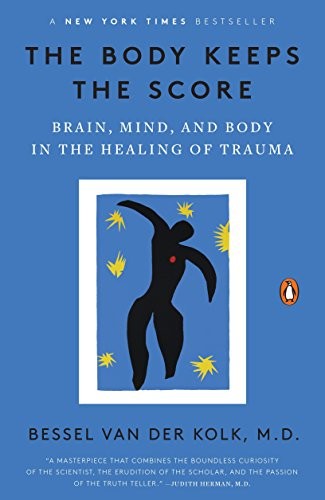
Before I picked up The Body Keeps the Score, I thought of trauma as something that happened *to* you, a painful memory stored in your head. Maybe you talked about it, processed it, and eventually, with enough effort, you moved on. I didn't truly grasp how deeply it could seep into the very fabric of your being, leaving an indelible mark not just on your mind, but on your nervous system, your physiology, your entire physical self. Bessel van der Kolk's work illuminated this truth for me: trauma isn't just a story you tell; it's a story your body lives. It's a persistent echo in your cells, a blueprint wired into your brain, manifesting as physical sensations, inexplicable aches, chronic tension, or a pervasive sense of unease that no amount of rational thought could dislodge.
What truly resonated was the concept that our brains, when faced with overwhelming threat, prioritize survival above all else. In those moments, the logical, language-processing parts of our brain can effectively shut down, while the primal, reptilian parts take over. The experience isn't filed away neatly as a narrative; instead, it's encoded as raw sensory data, fragmented images, visceral sensations, and physiological states. This means the terror, the helplessness, the immobility — they get stuck. They don't just disappear. Your body, in its attempt to protect you, remains in a state of hypervigilance or chronic shutdown, constantly preparing for a danger that may no longer be present, or reliving a past one. The tight shoulders, the shallow breath, the racing heart at unexpected moments, the inability to feel truly safe even in a safe environment – these aren't signs of weakness. They are the body’s intelligent, albeit maladaptive, ways of continuing to cope with what it experienced.
He talks about how trauma literally reshapes the brain, affecting everything from our capacity for pleasure and engagement to our ability to regulate emotions and connect with others. It creates a disconnect, an internal exile where parts of ourselves feel out of reach or constantly on guard. The central idea, the one that kept me reading late into the night, was that healing isn't just about understanding the 'what' or the 'why' on a cognitive level. It's about helping the body complete what it couldn't do at the time of the trauma – whether that was to fight, to flee, or to fully process the overwhelm. It’s about learning to safely inhabit your own skin again, to be present with sensation, and to find ways to soothe a nervous system that has been stuck in survival mode. It’s about building new pathways in the brain that foster safety, connection, and the ability to live in the present, rather than being perpetually pulled back into the past by the body's unwavering memory.
The Echo in My Shoulders
There was this particular tension, a knot high in my right shoulder, that had been with me for years. It wasn’t a muscle strain from the gym; it was a deep, unyielding hardness, like a permanent shrug. Massages offered temporary relief, but it always returned, a stubborn sentinel. I’d seen physiotherapists, chiropractors, even tried acupuncture, all to no lasting effect. They’d poke and prod, prescribe exercises, and I’d dutifully follow, but the knot remained, a stubborn sentinel. I used to joke about it, calling it my 'stress anchor,' but deep down, it was more than that. It felt like a part of me that refused to soften, refused to let go, even when my conscious mind desperately wanted to.
One afternoon, I was trying to write, something I usually loved, but found myself staring blankly at the screen. The knot in my shoulder felt particularly aggressive that day, pulling my neck to one side, making concentration impossible. Frustration mounted, turning into a familiar wave of despair. I felt trapped inside myself, unable to move forward, unable to relax. It was a pattern I knew well: the physical discomfort leading to mental distress, which then amplified the physical discomfort.
I had been reading the chapters in The Body Keeps the Score about the body's natural defense mechanisms, how the freeze response can manifest as rigidity, how chronic tension can be the body’s way of bracing for impact that never comes, or bracing against a memory it can’t process. I put the book down, leaned back in my chair, and for the first time, instead of trying to 'fix' the knot, I just paid attention to it. I closed my eyes and breathed into that hard, unyielding place. It wasn't just tight; it pulsed with a low, vibrating energy. And then, a fleeting image surfaced: a memory from years ago, a moment of profound helplessness, where I literally felt myself bracing, pulling my shoulders up to my ears, trying to make myself smaller, invisible. I hadn't thought about that particular incident in detail for ages; my mind had glossed over it, deemed it 'dealt with.' But my body? My body had never forgotten. It had held onto that posture, that visceral attempt to protect, for all these years.
It wasn't a sudden magical dissolution of the knot, not a Hollywood-style epiphany where all pain vanished. But in that moment, something shifted. I wasn't just a mind with a problematic shoulder; I was a whole being whose shoulder had been trying, in its own primitive way, to tell me something, to hold a piece of my past that my conscious brain had discarded. There was a quiet acknowledgement, a sense of grief mixed with a strange kind of gratitude for my body’s persistence. It wasn't fighting me; it was protecting me. Understanding that allowed me to approach it with a different kind of tenderness, a whisper of acceptance rather than a demand for it to just 'relax.' It started a slow, deliberate process of noticing, of listening, of gently coaxing instead of forcing. The knot is still sometimes there, a reminder, but it no longer feels like an enemy. It feels like a part of my story, finally being heard.
What I'd Tell Someone Starting This Book
- Don't rush it. This isn't a book to skim. Read it in chunks, and let the concepts sit with you. Some chapters might feel heavy; it’s okay to put it down for a day or two and come back.
- Pay attention to your own body as you read. You might notice physical sensations or emotional shifts that parallel what's being described. That's not a sign something's wrong; it's your system connecting.
- This book offers an explanation, not a quick fix. It's an invitation to understand, and true healing is a long, often messy, non-linear process. Be kind to yourself through it.
- You don't need to have a dramatic "trauma" story to benefit. The concepts of how our nervous systems respond to stress, overwhelm, and difficult experiences are universal.
- Consider exploring some of the somatic practices mentioned or implied in the book, even small ones like paying attention to your breath or the feeling of your feet on the ground. Reading is one thing; feeling is another.